seolounge
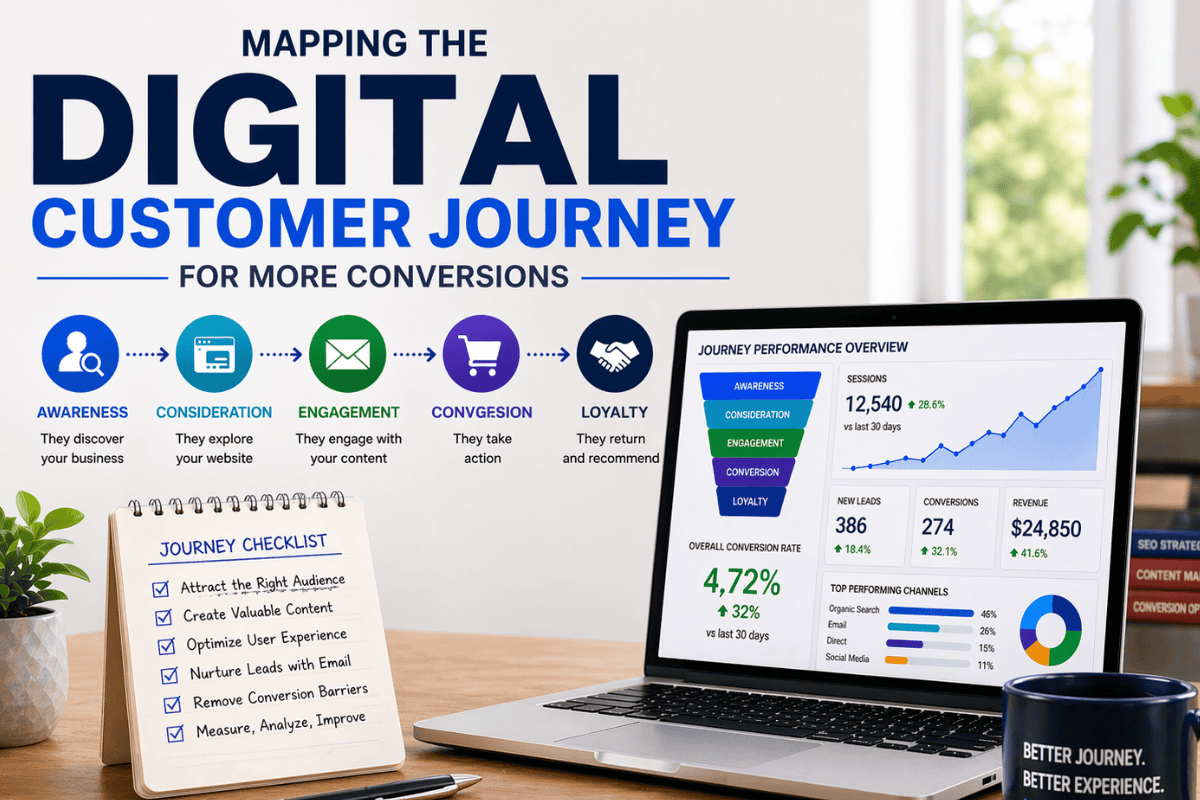
The digital customer journey is the path people take from discovering your business online to becoming a paying customer. For many small businesses, traffic is not the real problem. Visitors may be landing on the website, clicking ads, or reading content, yet conversions remain low. That usually means the journey is broken somewhere between first interest and final action.
When users feel confused, distracted, or uncertain, they leave. When the journey feels clear, helpful, and frictionless, they move forward. That is why businesses that understand the digital customer journey often outperform competitors spending more on ads. They guide visitors better.
Whether someone finds you through search, social media, referrals, or paid campaigns, every touchpoint shapes their decision. Mapping that experience helps you identify drop-off points, improve user flow, and create more conversions without relying only on more traffic.
Key Takeaways
- The digital customer journey directly impacts leads, sales, and customer loyalty.
- Most businesses lose conversions through friction, not lack of traffic.
- Clear messaging and smoother user flow improve results at every stage.
- Journey mapping reveals where prospects drop off before converting.
- Optimizing touchpoints often delivers better ROI than increasing ad spend.
What Is the Digital Customer Journey?
The digital customer journey is the complete online path a person follows before, during, and after buying from your business. It includes every interaction someone has with your brand across search engines, social media, ads, emails, landing pages, review platforms, and your website. Instead of viewing conversions as one isolated click, the journey shows how multiple touchpoints influence trust and buying decisions.
For example, a customer may first discover your business through Google, visit your website, leave without contacting you, later see a retargeting ad, read reviews, then return through a branded search and submit a form. That entire sequence is the customer journey. If any step creates confusion or hesitation, conversions can be lost.
This is why customer journey mapping matters. It helps you understand how real people move through awareness, consideration, and decision stages rather than guessing what caused a lead or sale. Businesses that map journeys can create stronger messaging, better page experiences, and smarter follow-up strategies.
The most effective journeys feel natural and easy. Users quickly understand what you offer, why it matters, and what to do next. When those elements are missing, even high traffic numbers can fail to generate revenue.
Why Most Businesses Lose Conversions Before the Sale
Many businesses assume low conversions mean they need more traffic. In reality, they often already have enough visitors to generate more leads or sales. The real issue is that prospects are dropping out before reaching the decision stage. A weak digital customer journey causes people to lose momentum long before they are ready to buy.
One common problem is unclear messaging. If visitors cannot quickly understand what you offer, who it helps, or why they should trust you, they leave. Another issue is poor website user flow. When navigation is confusing, pages feel cluttered, or calls to action are buried, users hesitate instead of progressing.
Trust gaps also reduce conversions. Missing reviews, weak branding, outdated design, slow page speed, and unclear pricing can all create friction. Even if your product or service is strong, uncertainty can stop buyers from taking the next step.
Some businesses lose leads by asking for too much too soon. Sending cold traffic directly to aggressive sales pages often underperforms because users still need education or reassurance. Matching the offer to the buyer journey stage is critical.
The biggest insight is this: many conversion problems are journey problems. Fixing drop-off points, simplifying decisions, and guiding users clearly often produces faster growth than increasing ad spend.
The 5 Core Stages of the Digital Customer Journey
Most buyers do not move from stranger to customer in one step. They progress through predictable stages, each with different questions, motivations, and objections. When your marketing aligns with these stages, conversions become easier because users receive the right message at the right time.
1. Awareness Stage Marketing
This is when people first realize they have a problem or need. They may search Google, scroll social media, or ask for recommendations. Your goal here is visibility and relevance through SEO, ads, educational content, and brand awareness.
2. Consideration Stage Buyer Journey
Now the prospect is comparing options. They want proof, clarity, and confidence. Service pages, case studies, reviews, videos, and comparison content help users evaluate whether your business is the right fit.
3. Decision Stage Conversions
At this stage, users are close to taking action. They need a smooth landing page, clear pricing or offer details, strong trust signals, and simple calls to action. Small friction points here can cost sales quickly.
4. Retention and Repeat Purchases
The journey does not end after the sale. Follow-up emails, onboarding, customer support, and proactive communication help improve satisfaction and lifetime value.
5. Advocacy and Referrals
Happy customers become growth channels. Reviews, referrals, testimonials, and repeat business all come from delivering a strong post-purchase experience.
Businesses that optimize all five stages create more predictable and sustainable growth than those focused only on first-click traffic.
How to Map the Digital Customer Journey Step by Step

Customer journey mapping is the process of visually outlining how prospects discover, evaluate, and buy from your business online. It helps you stop guessing and start improving the real path users take. When done correctly, journey mapping reveals missed opportunities, friction points, and stages where conversions are being lost.
1. Define Your Ideal Customer
Start with the audience you want to attract. Identify their goals, pain points, objections, and buying triggers. Different customer segments may follow different paths, so clarity here matters.
2. Identify Traffic Sources
Document where users first find your business. This may include Google search, paid ads, referrals, social media, email campaigns, or direct traffic. Knowing entry points helps you understand intent and expectations.
3. List Every Key Touchpoint
Map each interaction after discovery. Common touchpoints include homepage visits, service pages, landing pages, forms, phone calls, review sites, live chat, and follow-up emails. Each step influences conversion decisions.
4. Track Drop-Off Points
Use analytics to identify where users leave. High bounce rates, abandoned forms, low click-through rates, and short session times often signal friction or weak messaging.
5. Improve the Journey
Simplify navigation, strengthen calls to action, improve page speed, add trust signals, and match content to user intent. Small adjustments across several touchpoints often create major conversion gains.
A customer journey map is valuable because it shows the business through the customer’s eyes. That perspective is where growth opportunities usually appear first.
How Customer Personas Improve Journey Mapping
A digital customer journey becomes far more effective when it is built around real customer personas. A persona is a profile of your ideal buyer based on behavior, goals, pain points, objections, and motivations. Without personas, many businesses create one generic journey for everyone, which often leads to weak messaging and lower conversions.
Different people buy for different reasons. A homeowner searching for urgent repairs behaves differently than a business owner researching long-term marketing services. One may need speed and reassurance, while the other needs proof, strategy, and ROI. If both users receive the same message, one or both may leave.
Create Personas Based on Real Data
Use website analytics, customer feedback, sales conversations, and past client trends to identify common audience types. Focus on practical factors such as budget sensitivity, urgency, desired outcomes, and decision-making style.
Match Messaging to Intent
Once personas are clear, tailor headlines, offers, content, and calls to action for each segment. A first-time buyer may need education, while a ready-to-buy prospect may need pricing clarity and trust signals.
Improve the Entire Journey
Personas help refine traffic targeting, landing page copy, email nurturing, and post-sale retention. They also reveal where specific users experience friction that others may not.
The best customer journeys feel personalized because they are designed around real people, not assumptions. That relevance often increases engagement, leads, and sales.
Essential Customer Touchpoints Across Digital Channels
Customer touchpoints are the moments when people interact with your brand during the digital customer journey. These interactions shape perception, trust, and conversion decisions. Many businesses focus only on their website, but conversions are influenced by multiple channels before someone ever fills out a form or makes a purchase.
Search Engine Touchpoints
For many businesses, Google is the first interaction. Your rankings, page titles, meta descriptions, and reviews all influence whether users click. If search visibility is weak or listings are unconvincing, prospects may never enter the journey.
Website and Landing Page Touchpoints
Once users arrive, your homepage, service pages, landing pages, navigation, and calls to action become critical. Visitors should immediately understand what you offer, who it helps, and what step to take next.
Social Media and Paid Ad Touchpoints
Social profiles and ads often reinforce credibility. Users may discover you on one platform, then research you elsewhere before deciding. Consistent branding and messaging across channels help maintain trust.
Email and Follow-Up Touchpoints
Email sequences, quote follow-ups, appointment reminders, and onboarding messages keep momentum moving after first contact. Slow or weak follow-up can cause warm leads to go cold quickly.
Review and Reputation Touchpoints
Testimonials, Google reviews, and case studies frequently become final-decision touchpoints. Prospects use them to reduce risk before buying.
Strong journeys are built by improving each touchpoint so users experience consistency, clarity, and confidence from first click to final conversion.
Website User Flow and Landing Page Optimization
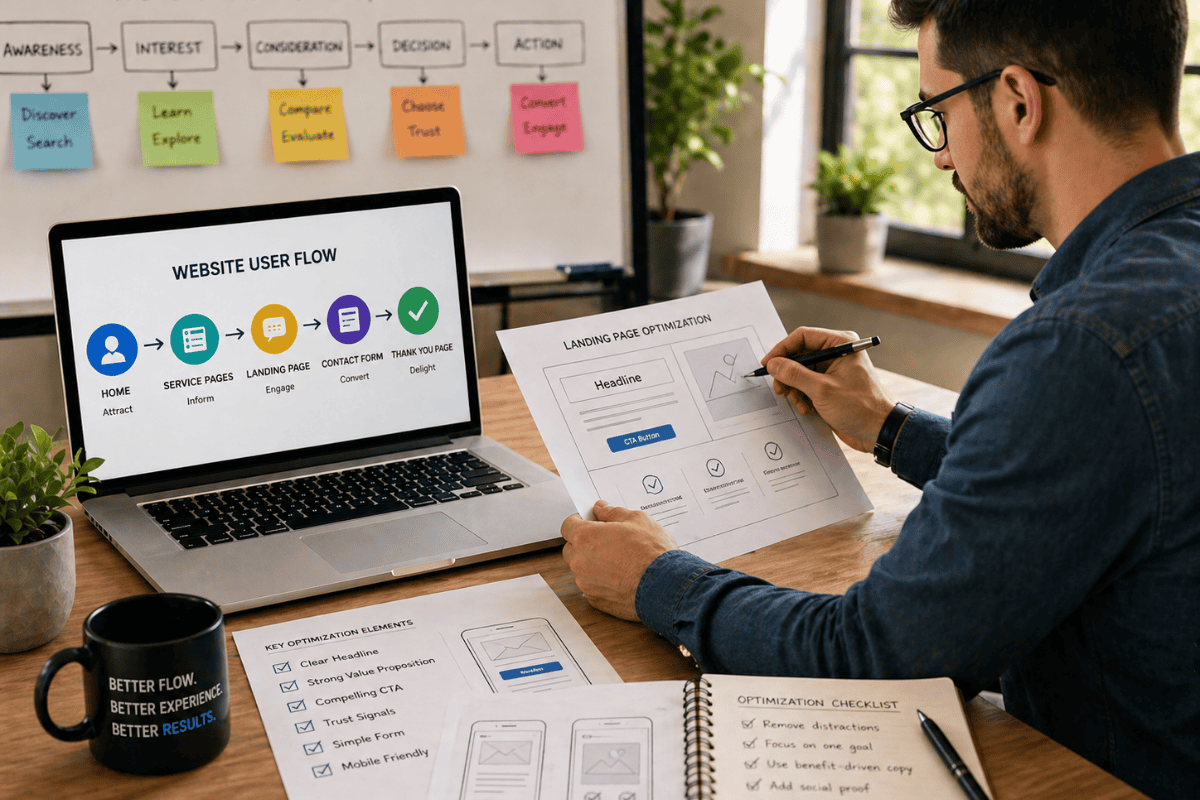
User flow is the path visitors take through your website as they move toward a conversion. It includes the pages they view, the buttons they click, and the decisions they make along the way. If that path feels confusing or overwhelming, people leave before becoming leads or customers. That is why website user flow plays a major role in digital customer journey optimization.
Make the Next Step Obvious
Every page should answer one core question: what should the visitor do next? Whether the goal is booking a call, requesting a quote, or reading a service page, users need clear direction. Strong calls to action placed in visible areas reduce hesitation.
Reduce Decision Fatigue
Too many menu options, cluttered layouts, or competing buttons can slow momentum. Simplifying navigation and limiting distractions helps users stay focused on the desired action.
Optimize Landing Pages for Intent
Landing pages should match the reason users clicked in the first place. If someone arrives from an ad about emergency services, the page should immediately speak to urgency, trust, and next steps. If they arrive from an educational blog, a softer conversion offer may perform better.
Build Trust Quickly
Use testimonials, clear headlines, benefit-driven copy, FAQs, and contact details to reassure visitors. Fast-loading pages and mobile-friendly design also improve conversion potential.
When user flow is smooth and landing pages align with intent, more visitors continue through the journey instead of dropping out early.
Common Friction Points That Hurt Website Conversions
Friction points are obstacles that slow users down, create doubt, or make taking action feel harder than it should. In the digital customer journey, even small frustrations can cause prospects to leave. Many businesses focus on attracting visitors but overlook the reasons those visitors fail to convert once they arrive.
Slow Page Speed
If pages load slowly, users often leave before engaging. Speed affects first impressions, mobile usability, and trust. A delay of only a few seconds can reduce leads and sales significantly.
Confusing Navigation
When menus are cluttered or page structure feels disorganized, visitors struggle to find what they need. If users cannot quickly locate services, pricing, or contact options, they often exit instead of exploring further.
Weak or Hidden Calls to Action
Many websites assume visitors know what to do next. They do not. If buttons are vague, buried, or inconsistent, users hesitate. Clear calls to action remove uncertainty and move people forward.
Trust Gaps
Missing reviews, poor design, outdated branding, lack of contact details, and unclear guarantees all create risk in the buyer’s mind. Prospects need reassurance before committing.
Overcomplicated Forms
Long forms asking for unnecessary information often kill conversions. Request only what you need to begin the conversation.
Most friction points are fixable. When you remove obstacles, simplify decisions, and create confidence, more of your existing traffic turns into real business results.
Lead Nurturing Strategy for Longer Sales Cycles
Not every visitor is ready to buy immediately. Many customers need time to research options, compare providers, ask internal stakeholders, or wait for the right timing. This is especially true for higher-ticket services, B2B offers, and trust-based purchases. When businesses ignore these longer sales cycles, they lose leads that were interested but not yet ready.
Lead nurturing keeps those prospects engaged until they are prepared to act. Instead of relying on one website visit, it uses consistent communication to build trust, answer objections, and maintain visibility throughout the buyer journey.
Use Email to Stay Top of Mind
Email remains one of the strongest nurturing tools. Send helpful content, case studies, FAQs, testimonials, and offers that match the prospect’s stage. Good nurturing feels valuable, not pushy.
Retarget Interested Visitors
Retargeting ads can reconnect with users who visited your site but did not convert. These reminders often work well when paired with educational or trust-building messaging.
Segment by Intent
Not all leads need the same follow-up. A pricing-page visitor may need a consultation offer, while a blog reader may need more education first. Segmenting by behavior improves conversion rates.
Respond Quickly
Fast responses to form submissions or inquiries dramatically improve close rates. Momentum matters.
The businesses that win longer sales cycles are often the ones that stay helpful, visible, and relevant after the first click.
How Content Marketing Supports Every Journey Stage
Content marketing is one of the most effective ways to guide users through the digital customer journey because it meets prospects with the right information at the right time. Instead of trying to force immediate sales, strategic content builds trust, answers questions, and moves people naturally toward conversion.
Awareness Stage Content
At the top of the funnel, users are identifying a problem or searching for ideas. Blog posts, educational videos, checklists, and SEO-focused articles help attract traffic while positioning your business as a helpful resource. The goal here is visibility and relevance.
Consideration Stage Content
Once prospects know they need a solution, they begin comparing options. This is where case studies, service pages, buying guides, comparison content, and testimonials become powerful. They reduce uncertainty and build confidence.
Decision Stage Content
When users are close to acting, they need proof and clarity. FAQs, pricing pages, consultation pages, demos, guarantees, and strong calls to action help remove final objections.
Retention and Loyalty Content
After the sale, onboarding emails, support resources, helpful tips, and loyalty offers strengthen customer satisfaction and repeat business.
Why It Matters
Many businesses create random content without linking it to the buyer journey. That often produces traffic without conversions. When content is mapped to journey stages, it becomes a system that attracts, nurtures, converts, and retains customers more effectively.
SEO and Search Intent in the Customer Journey
SEO plays a major role in the digital customer journey because search engines are often where the journey begins. People go to Google when they need answers, solutions, or providers. If your business appears at the right moment with content that matches intent, you earn qualified traffic that is already motivated to engage.
What Search Intent Really Means
Search intent is the reason behind a query. Some users want information, others want comparisons, and some are ready to buy now. Understanding intent allows you to create pages that meet expectations instead of forcing one message on every visitor.
Informational Intent
Searches like “how to improve website conversions” or “what is customer journey mapping” signal early-stage interest. Blog content and educational resources work best here.
Commercial Intent
Queries such as “best marketing agency near me” or “SEO services for small business” show users comparing options. Service pages, case studies, and trust signals become important.
Transactional Intent
Searches like “book SEO consultation” or “hire web designer now” indicate readiness to act. These users need direct landing pages with clear calls to action.
Why This Matters for Conversions
When pages align with intent, bounce rates decrease and conversions rise. A user searching for answers should not land on a hard-sell page. A ready buyer should not be forced through excessive education first.
Strong SEO does more than generate traffic. It places the right people into the right stage of the customer journey at the right time.
Paid Ads vs Journey Optimization: Where ROI Really Comes From
Many businesses assume growth comes from spending more on paid ads. While ads can generate traffic quickly, they do not automatically create conversions. If the digital customer journey is weak, increasing traffic often means paying to send more people into a broken system.
This is why some companies scale ad budgets yet see disappointing returns. The problem is not always the traffic source. It is what happens after the click.
What Paid Ads Do Well
Paid ads are excellent for visibility, targeting, and speed. They can place your offer in front of qualified audiences fast. This makes them valuable for lead generation, promotions, and testing offers.
Where Ads Often Fail
If landing pages are unclear, trust signals are weak, forms are too long, or follow-up is slow, ad traffic leaks out quickly. You may generate clicks but not profitable results.
What Journey Optimization Improves
Journey optimization focuses on conversion rate improvements after traffic arrives. That includes better messaging, stronger calls to action, cleaner user flow, faster pages, and improved nurturing systems.
The Smarter Growth Formula
When you improve conversion rates first, every future ad dollar becomes more valuable. For example, doubling conversion rate can outperform doubling ad spend with lower risk.
The strongest strategy usually combines both approaches: use ads to create opportunity and optimize the journey to maximize return. Businesses that only buy traffic often plateau. Businesses that improve the path usually grow more efficiently.
Digital Customer Journey Analytics and KPIs to Track
You cannot improve what you do not measure. Many businesses make changes to websites, ads, or content without knowing where the real conversion problems exist. Digital customer journey analytics help you understand how users move through your funnel, where they drop off, and which touchpoints create results.
Traffic Quality Metrics
Start by measuring traffic sources. Compare visitors from SEO, paid ads, social media, referrals, and email. Some channels may send more traffic, while others send higher-converting traffic. Volume alone can be misleading.
Engagement Metrics
Track bounce rate, pages per session, time on site, and scroll depth. These signals help reveal whether users are interested or confused. If visitors leave quickly, the issue may be poor relevance or weak first impressions.
Conversion Metrics
Monitor form submissions, booked calls, purchases, quote requests, and conversion rate by page or channel. This shows where revenue opportunities actually come from.
Journey Drop-Off Metrics
Review abandoned forms, cart abandonment, exit pages, and low click-through rates between steps. These are often the clearest indicators of friction.
Retention Metrics
Repeat purchases, customer lifetime value, email engagement, and referral rates help measure post-sale journey strength.
The most valuable KPI is not always traffic. It is often how efficiently traffic turns into customers. Businesses that track the full journey make smarter decisions, fix issues faster, and grow with less waste.
Examples of Digital Customer Journeys for Small Businesses
Understanding theory is useful, but seeing real-world examples makes journey mapping easier to apply. Small businesses across different industries often have unique buying paths, yet the same core principle remains true: people need the right information and experience at the right time to convert.
Local Service Business Example
A homeowner searches “AC repair near me” during an urgent problem. They compare Google listings, read reviews, visit your site, and call the company that looks fastest and most trustworthy. In this journey, local SEO, mobile usability, click-to-call buttons, and reviews matter most.
Professional Services Example
A business owner searches for marketing help, reads several blog posts, downloads a guide, joins an email list, reviews case studies, then books a strategy call weeks later. This journey is longer and relies on trust-building content, lead nurturing, and clear consultation offers.
Ecommerce Example
A shopper sees a product ad on social media, visits the product page, leaves, receives a retargeting ad, returns later, checks reviews, and completes the purchase. Here, retargeting, product page optimization, and social proof are critical.
Health or Wellness Example
A prospect discovers a provider through search, reads testimonials, checks credentials, visits the FAQ page, and books online. Trust signals and reassurance often outweigh price.
Different industries have different journeys, but every successful path reduces friction, builds confidence, and makes the next step simple.
How to Improve Customer Experience for More Sales
Customer experience is one of the strongest drivers of conversions because people buy more easily when the process feels smooth, clear, and trustworthy. Many businesses focus only on traffic generation, but a frustrating experience can cancel out even the best marketing efforts. Improving customer experience often leads to more leads, higher close rates, and stronger loyalty.
Make Every Step Easy
Visitors should never have to guess what to do next. Clear navigation, fast-loading pages, visible contact options, and simple calls to action reduce frustration. The easier it is to move forward, the more likely users are to convert.
Communicate Clearly
Confusing offers and vague messaging create hesitation. Explain what you do, who it helps, what results customers can expect, and how to get started. Clear communication builds confidence quickly.
Respond Fast
Speed matters after a prospect reaches out. Quick responses to inquiries, quote requests, or bookings can dramatically increase conversion rates. Delayed replies often send warm leads to competitors.
Build Trust Throughout the Journey
Use reviews, testimonials, guarantees, professional branding, and transparent policies. Trust should be reinforced at every touchpoint, not only on the homepage.
Listen and Improve
Customer feedback reveals hidden friction points. Complaints, questions, and recurring objections often show exactly where the experience needs work.
When businesses prioritize customer experience, they make buying easier. Easier buying usually means more sales.
Why a Smoother Journey Often Beats More Traffic
Many businesses believe growth comes from getting more visitors. While traffic matters, it is often not the fastest path to better results. If your website already receives qualified visitors, improving the digital customer journey can produce larger gains than simply buying or chasing more clicks.
Think of traffic like water flowing into a bucket with holes. More water helps temporarily, but fixing the leaks creates lasting improvement. In marketing, those leaks are confusing pages, weak offers, poor follow-up, trust gaps, and unnecessary friction.
Higher Conversion Rates Multiply Existing Traffic
If 1,000 monthly visitors convert at 2%, you gain 20 leads or sales. Raise that rate to 4% through journey optimization and the same traffic produces 40. That often delivers better ROI than doubling ad spend to force more traffic into an underperforming funnel.
Better Journeys Lower Acquisition Costs
When more visitors convert, your cost per lead and cost per sale usually decrease. This makes SEO, ads, referrals, and email campaigns more profitable.
Better Experiences Build Long-Term Growth
Smoother journeys also create stronger reviews, repeat purchases, referrals, and customer loyalty. That means growth continues after the first conversion.
Where to Improve First
Start with landing pages, calls to action, page speed, mobile usability, trust signals, and follow-up systems. These changes often create immediate impact.
More traffic can help, but optimizing the path people take after they arrive is frequently the smarter and more scalable move.
How Innovative Flare Helps Businesses Optimize Conversions
Many businesses know they have a conversion problem but are unsure where the breakdown is happening. Traffic may be coming in, yet leads stay flat. Ads may generate clicks, but sales remain inconsistent. This usually means the digital customer journey needs strategic improvement. That is where Innovative Flare helps.
Instead of focusing only on surface-level metrics, Innovative Flare looks at the full customer path—from first click to final conversion. The goal is to identify friction, strengthen messaging, and build systems that turn more visitors into customers.
Journey-Focused SEO Strategy
SEO should attract qualified traffic, not random visitors. Innovative Flare helps businesses align search intent with content and landing pages so the right users enter the funnel at the right stage.
Conversion-Driven Web Design
Your website should do more than look good. It should guide users clearly toward action. Improved user flow, mobile usability, speed, and trust signals often create immediate gains.
Growth Through Smarter Marketing
From paid traffic strategy to lead nurturing systems, Innovative Flare helps businesses connect marketing efforts into one cohesive journey that converts more efficiently.
The best results usually come from improving the path, not just increasing traffic. That is the advantage of a journey-first growth strategy.
Book a Strategy Consultation
If your website gets traffic but struggles to convert visitors into leads or customers, the problem may not be visibility. It may be the journey. Many businesses invest in SEO, ads, and content, yet still lose opportunities because the customer path feels unclear, slow, or full of friction.
When the digital customer journey is optimized, more of your existing traffic turns into measurable results. Visitors understand your offer faster, trust your brand sooner, and take action with less hesitation. That means stronger ROI without always needing a larger ad budget.
Innovative Flare helps small businesses uncover where prospects drop off, improve conversion paths, and build systems designed for growth. Whether the issue is messaging, landing pages, user flow, SEO intent alignment, or lead follow-up, the right fixes can create major gains.
If your website gets traffic but struggles to convert visitors into leads or customers, the problem may be the journey. Let’s map your customer path, remove friction, and build a strategy that drives more conversions.
Frequently Asked Questions About the Digital Customer Journey
What is a digital customer journey?
The digital customer journey is the online path a person takes from first discovering your business to becoming a customer and potentially returning again. It includes touchpoints such as search engines, social media, ads, emails, landing pages, reviews, and your website.
Why is customer journey mapping important?
Customer journey mapping helps businesses understand how people interact with their brand, where users drop off, and what changes can improve conversions. It replaces guesswork with clear data and strategy.
How does the customer journey affect conversions?
If the journey is confusing, slow, or lacks trust signals, visitors often leave before taking action. A smoother journey with better messaging and clearer next steps usually increases leads and sales.
What are the stages of the customer journey?
The core stages are awareness, consideration, decision, retention, and advocacy. Each stage requires different messaging, content, and offers to move users forward effectively.
How do I improve my website conversion rate?
Start by improving page speed, simplifying navigation, strengthening calls to action, reducing form friction, and adding testimonials or reviews. Small usability improvements often create significant gains.
What tools help track the customer journey?
Google Analytics, heatmap tools, CRM platforms, call tracking software, and form analytics tools can help you understand user behavior and identify drop-off points.
Is more traffic always the best way to grow?
Not always. If your current traffic is not converting, optimizing the customer journey often delivers better ROI than simply buying more traffic through ads.
How long does it take to improve conversions?
Some fixes such as stronger calls to action or shorter forms can create fast results. Larger improvements involving SEO, redesigns, or nurturing systems may take longer but often produce stronger long-term gains.
Can small businesses benefit from journey mapping?
Yes. Small businesses often benefit the most because improving a few key touchpoints can create noticeable increases in leads, bookings, and sales without massive budgets.
When should I hire professional help?
If traffic is coming in but results remain weak, or if you are unsure where users drop off, professional support can help identify issues faster and build a stronger growth strategy.