seolounge
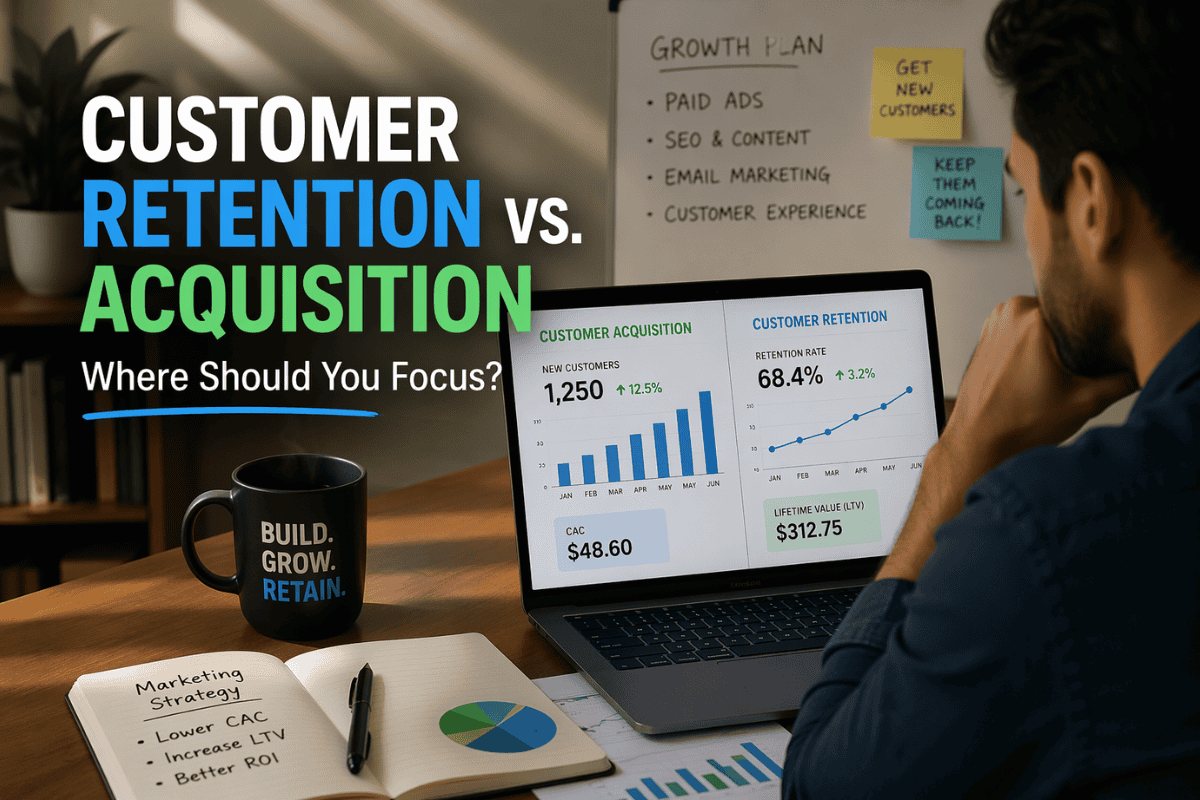
Customer Retention vs Acquisition: Where Should You Focus?
For many small business owners, growth feels like a constant push to attract new customers. More leads, more traffic, more sales. But focusing only on acquisition can quietly drain your budget while limiting long-term profitability. The real question is not just how to get more customers, but how to get more value from every customer you already have.
This is where the debate around customer retention vs acquisition becomes critical. Both strategies play an important role in business growth, but they deliver very different outcomes when it comes to cost, revenue, and sustainability. Acquisition brings new opportunities, while retention builds lasting relationships that compound over time.
Understanding how these two approaches impact your marketing strategy can help you make smarter decisions, allocate your budget more effectively, and unlock higher returns without constantly chasing new leads.
In this guide, we will break down the real differences, costs, and ROI behind retention and acquisition so you can focus on what actually drives growth.
Key Takeaways
- Customer retention is typically more cost-effective than acquisition and delivers higher long-term ROI.
- Acquiring new customers is essential for growth, but it often requires higher upfront investment.
- Repeat customers generate more revenue over time through increased trust and loyalty.
- Small improvements in retention can significantly increase overall profitability.
- The most effective strategy balances acquisition and retention based on business goals.
What Is Customer Acquisition?
Customer acquisition refers to the process of attracting and converting new customers to your business. It is often the first focus for small businesses because growth feels directly tied to bringing in fresh leads. Whether through digital marketing, referrals, or advertising, acquisition is how you expand your reach and introduce your brand to new audiences.
Most acquisition strategies rely on visibility and attention. This includes search engine optimization through SEO, paid ads, social media marketing, and content creation. These channels are designed to generate awareness, capture interest, and guide potential customers into your sales funnel.
While acquisition is essential, it comes with a cost. Every new customer requires investment in marketing and sales efforts, from ad spend to time spent nurturing leads. This is commonly measured as customer acquisition cost (CAC), which can quickly add up if campaigns are not optimized.
Another challenge is unpredictability. Acquisition efforts often depend on changing algorithms, competition, and market conditions. This makes it harder to maintain consistent results without ongoing investment.
Despite these challenges, acquisition plays a vital role in business growth. Without new customers, your business cannot scale. The key is understanding how acquisition fits into a larger strategy that also prioritizes long-term value.
What Is Customer Retention?
Customer retention is the process of keeping your existing customers engaged, satisfied, and returning to your business over time. Instead of constantly chasing new leads, retention focuses on building relationships that encourage repeat purchases and long-term loyalty.
For small businesses, retention is often where the highest profit potential exists. Once a customer has already trusted your brand and made a purchase, the cost to bring them back is significantly lower than acquiring someone new. This is why strategies like email marketing, follow-ups, and personalized offers play such a critical role in retention marketing.
Effective retention strategies include consistent communication, loyalty programs, and delivering a strong customer experience. For example, using content marketing or email campaigns helps keep your business top-of-mind while providing ongoing value to your audience.
Retention also directly impacts customer lifetime value, which measures how much revenue a single customer generates over time. The longer you retain a customer, the more valuable they become to your business.
Another advantage of retention is predictability. Unlike acquisition, which can fluctuate based on external factors, retention creates a more stable revenue stream. Loyal customers are more likely to buy again, refer others, and spend more per transaction.
Ultimately, customer retention is not just about keeping customers—it is about maximizing the value of every relationship you build.
Customer Retention vs Acquisition: Key Differences
Understanding the difference between customer retention vs acquisition goes beyond simple definitions. These two strategies impact your business in fundamentally different ways, especially when it comes to cost, effort, and long-term growth.
The most noticeable difference is cost. Acquiring a new customer often requires significant investment in marketing and advertising, while retaining an existing customer typically costs far less. This is because retention focuses on people who already trust your brand, reducing the effort needed to convert them again.
Time is another major factor. Acquisition can take weeks or even months, depending on your sales cycle. From generating leads to closing a deal, the process can be resource-intensive. Retention, on the other hand, is faster because you are engaging customers who are already familiar with your business.
When it comes to revenue, retention has a compounding effect. Existing customers are more likely to make repeat purchases, spend more over time, and refer others. This creates a more predictable and stable income stream compared to the uncertainty of constantly acquiring new leads.
Risk also plays a role. Acquisition strategies often depend on external platforms like search engines or social media, which can change without notice. Retention relies more on relationships and owned channels like email, making it less vulnerable to outside disruptions.
Ultimately, acquisition fuels growth, but retention strengthens it. Businesses that understand how to leverage both are better positioned for sustainable success.
The True Cost of Acquiring New Customers

At first glance, customer acquisition seems like the fastest path to growth. Run ads, generate leads, and convert new buyers. But when you break down the numbers, the cost of acquiring customers is often much higher than most small businesses realize.
Customer acquisition cost (CAC) includes every expense tied to gaining a new customer. This goes beyond ad spend. It also includes content creation, marketing tools, sales time, website optimization, and even the cost of failed campaigns. When all of these factors are combined, the real cost per customer can be significantly higher than expected.
For example, investing in digital marketing like paid ads or SEO can generate traffic, but not every visitor converts. This means you are paying not only for the customers you gain, but also for the ones you don’t. Over time, this increases your overall acquisition costs.
Another hidden factor is time to conversion. Many potential customers do not buy immediately. They may interact with your brand multiple times before making a decision, which extends the sales cycle and increases the cost required to convert them.
There is also ongoing pressure to maintain performance. Acquisition efforts require continuous investment. The moment you stop spending, your lead flow often slows down or stops entirely. This makes acquisition a recurring expense rather than a one-time investment.
Understanding these costs is critical because it highlights why relying only on acquisition can limit profitability. Without a strategy to increase value after the first purchase, your return on investment remains constrained.
Why Retention Drives Higher ROI
While acquisition focuses on bringing in new customers, retention is where profitability truly accelerates. The key reason is simple: existing customers are far more valuable over time. Once someone has already purchased from your business, the trust barrier is gone, making future sales easier, faster, and more cost-effective.
This is where customer lifetime value (CLV) becomes critical. CLV measures how much total revenue a customer generates throughout their relationship with your business. The longer you retain a customer, the more opportunities you have to increase that value through repeat purchases, upsells, and referrals.
Retention also improves your return on investment because it reduces the need for constant spending on acquisition. Instead of paying to acquire new customers every time you want to grow, you can generate additional revenue from your existing customer base. This creates a compounding effect where each retained customer becomes more profitable over time.
Another major advantage is higher conversion rates. Existing customers are more likely to buy again because they are already familiar with your brand and have had a positive experience. This reduces friction in the buying process and increases overall revenue efficiency.
Retention also strengthens brand loyalty. Loyal customers not only return, but they often refer others, effectively supporting your acquisition efforts without additional cost. This creates a powerful cycle where retention fuels growth organically.
For small businesses, even a small increase in retention can lead to significant gains in revenue. That is why focusing on long-term customer value often delivers better results than chasing short-term acquisition wins.
Retention vs Acquisition: Which Should You Prioritize?
Choosing between customer retention vs acquisition is not about picking one over the other. It is about understanding where your business is right now and where the greatest opportunity for growth exists. The right focus depends on your stage, resources, and long-term goals.
If your business is new or struggling to generate leads, acquisition should be your initial priority. You need a steady flow of new customers to build momentum and establish your presence in the market. Strategies like SEO, paid ads, and lead generation help create that foundation.
However, once you start acquiring customers consistently, the focus should shift. This is where many businesses make a costly mistake. They continue pouring resources into acquisition while neglecting retention, leaving significant revenue on the table.
For established businesses, retention often delivers a higher return. You already have a customer base, which means you have an opportunity to increase revenue without increasing acquisition costs. Improving retention even slightly can have a major impact on profitability.
Industry also plays a role. Service-based businesses, subscription models, and local providers benefit heavily from retention because repeat interactions are common. In contrast, one-time purchase businesses may rely more on acquisition but can still benefit from retention through referrals and repeat offers.
The most effective approach is balance. Use acquisition to bring in new customers, but build strong retention systems to maximize their value. When both strategies work together, you create a scalable and sustainable growth engine.
How to Improve Customer Retention (Actionable Strategies)
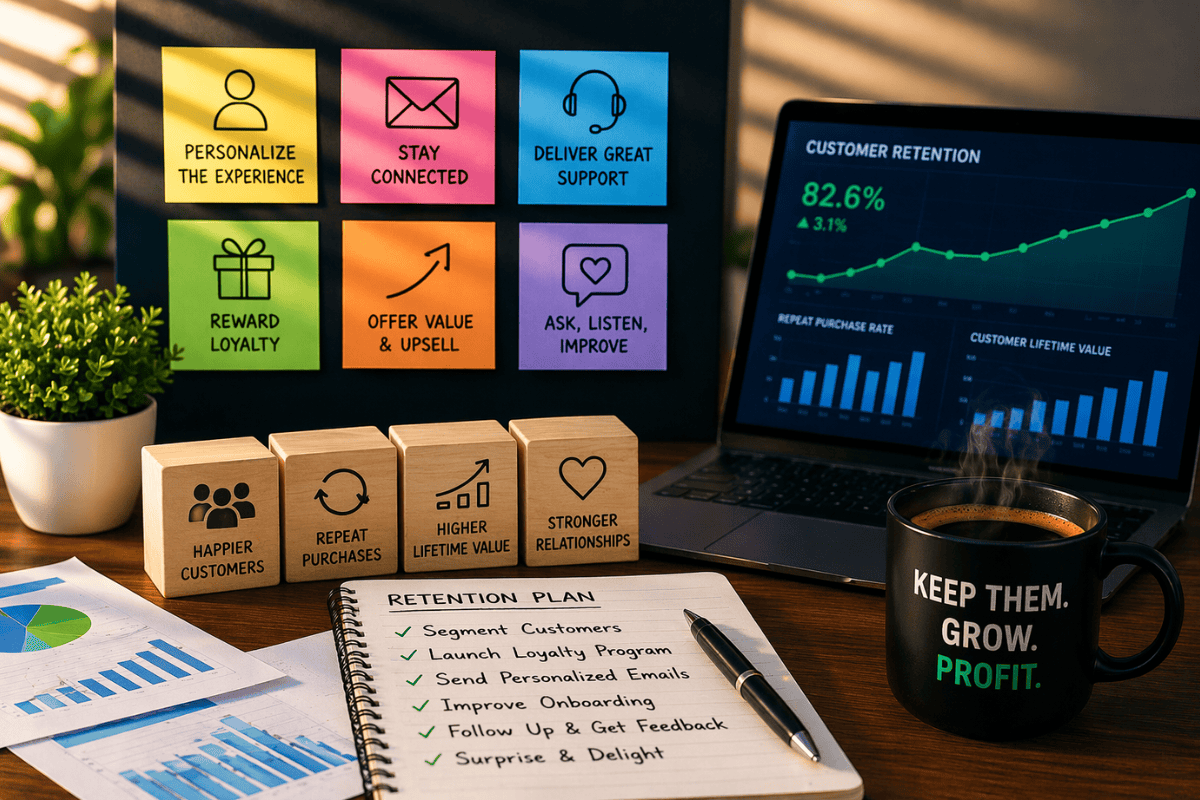
Improving customer retention does not require complex systems or massive budgets. What it does require is consistency, intentional communication, and a focus on delivering value beyond the first transaction. When done correctly, retention strategies turn one-time buyers into loyal customers who generate ongoing revenue.
One of the most effective retention tools is email marketing. Staying in touch with your customers through personalized updates, offers, and helpful content keeps your business top-of-mind. This is especially powerful when combined with segmentation, allowing you to send relevant messages based on customer behavior.
Another key strategy is creating a strong customer experience. From your website to your service delivery, every interaction should feel smooth and professional. Investing in web design can improve usability and trust, making customers more likely to return.
Loyalty programs are also highly effective. Offering incentives such as discounts, rewards, or exclusive access encourages repeat purchases and builds long-term relationships. Even simple programs can significantly increase retention rates.
Follow-up systems are often overlooked but incredibly valuable. Checking in after a purchase, asking for feedback, or offering additional support shows customers that you care about their experience. This builds trust and increases the likelihood of future business.
Finally, personalization plays a major role. Customers are more likely to stay loyal when they feel understood. Tailoring your messaging, recommendations, and offers based on their preferences can dramatically improve engagement and retention.
By focusing on these strategies, small businesses can create a retention system that drives consistent revenue without constantly relying on new customer acquisition.
How to Improve Customer Acquisition (Smart Growth Tactics)
While retention drives long-term profitability, customer acquisition is still essential for scaling your business. The key is not just to acquire more customers, but to do it efficiently. Smart acquisition strategies focus on attracting the right audience, reducing costs, and increasing conversion rates.
One of the most effective acquisition channels is search engine optimization. Investing in SEO (Search Engine Optimization) helps your business appear when potential customers are actively searching for your products or services. This creates high-intent traffic that is more likely to convert compared to passive marketing channels.
Content marketing is another powerful strategy. By creating valuable blog posts, guides, and resources, you can attract potential customers, build authority, and generate leads over time. A strong blog content strategy not only supports SEO but also nurtures prospects before they even contact your business.
Paid advertising can accelerate results, especially for businesses looking for immediate visibility. Platforms like Google Ads and social media ads allow precise targeting, helping you reach the right audience quickly. However, success depends on optimizing campaigns to avoid wasted spend.
Conversion optimization is equally important. Driving traffic alone is not enough if your website does not convert visitors into customers. Improving landing pages, calls to action, and overall user experience can significantly increase your return on acquisition efforts.
Finally, focusing on the quality of leads matters more than quantity. Attracting the right customers reduces churn and increases lifetime value, making your acquisition efforts more profitable in the long run.
When executed strategically, customer acquisition becomes a scalable engine that feeds your business with high-value opportunities.
Finding the Right Balance Between Acquisition and Retention
The most successful businesses do not choose between acquisition and retention—they balance both strategically. Focusing too heavily on one while neglecting the other creates gaps in your growth model. Acquisition without retention leads to constant spending, while retention without acquisition limits expansion.
A common guideline for small businesses is to allocate a larger portion of the marketing budget toward acquisition early on, then gradually increase investment in retention as the customer base grows. This shift allows you to maximize the value of each new customer instead of starting from zero every time.
The ideal balance depends on your business model. Service-based businesses and local providers often benefit from a stronger focus on retention because repeat business and referrals drive revenue. On the other hand, businesses in highly competitive markets may need consistent acquisition efforts to maintain visibility.
Timing also matters. If your acquisition costs are rising or your return on ad spend is declining, it may be time to shift focus toward retention strategies. Improving customer experience, communication, and follow-up systems can unlock revenue without increasing your marketing spend.
Another important factor is data. Tracking metrics like customer acquisition cost, retention rate, and customer lifetime value helps you make informed decisions. When you understand how these metrics interact, you can adjust your strategy to improve overall performance.
Ultimately, sustainable growth comes from alignment. Acquisition brings customers in, while retention ensures they stay and continue to generate value. When both strategies work together, your business becomes more efficient, profitable, and resilient.
Real-World Example: Retention vs Acquisition in Action
To truly understand the impact of customer retention vs acquisition, it helps to look at a simple real-world scenario. Imagine two small businesses with the same budget and similar offerings, but different strategies.
Business A focuses heavily on acquisition. Each month, they invest most of their budget into ads and lead generation to bring in new customers. While they consistently generate new sales, they rarely follow up after the first purchase. As a result, most customers never return, and revenue depends entirely on continuous marketing spend.
Business B takes a different approach. They still invest in acquisition, but they also prioritize retention. After each sale, they follow up with customers, send email campaigns, and offer incentives for repeat purchases. Over time, they build a loyal customer base that continues to buy from them.
Now compare the results. Business A may generate short-term spikes in revenue, but their costs remain high because they must constantly acquire new customers. Business B, on the other hand, starts to see compounding growth. Each retained customer contributes more revenue over time, reducing the need for constant acquisition spending.
This difference becomes even more significant as the business grows. Retention creates stability and predictability, while acquisition alone creates pressure to continuously perform.
The takeaway is clear: businesses that invest in retention alongside acquisition build stronger, more profitable growth models that scale more efficiently.
Common Mistakes Businesses Make
Many small businesses struggle with growth not because they lack effort, but because they misallocate their focus between acquisition and retention. Understanding these common mistakes can help you avoid wasted budget and missed opportunities.
One of the biggest mistakes is over-investing in acquisition while ignoring existing customers. It is easy to get caught up in generating new leads, but without a system to retain them, you are constantly starting from zero. This leads to higher costs and inconsistent revenue.
Another common issue is the absence of a retention strategy altogether. Businesses often assume customers will return on their own, but without follow-up communication, personalized offers, or ongoing engagement, most will not. Retention requires intentional effort.
Focusing on the wrong metrics is also a problem. Many businesses prioritize vanity metrics like traffic or impressions instead of tracking customer lifetime value, retention rate, or actual revenue. Without the right data, it is difficult to optimize your strategy effectively.
Inconsistent customer experience can also hurt retention. If your service quality, communication, or website experience varies, customers are less likely to return. Investing in areas like digital marketing and user experience helps create consistency that builds trust.
Finally, failing to align acquisition and retention efforts creates inefficiency. When these strategies operate separately, opportunities are lost. For example, new leads are not properly nurtured, and existing customers are not leveraged for referrals or repeat sales.
Avoiding these mistakes allows you to create a more balanced, efficient strategy that supports both growth and long-term profitability.
Build a Smarter Growth Strategy
If your current strategy is heavily focused on acquiring new customers, you may be overlooking one of the most powerful drivers of growth—your existing customer base. While acquisition is necessary, true scalability comes from combining it with strong retention systems that increase revenue without constantly increasing costs.
The most successful small businesses do not rely on guesswork. They build structured marketing systems that attract, convert, and retain customers consistently. This includes optimizing your website, improving your messaging, and implementing strategies that maximize customer lifetime value.
At Innovative Flare, we help businesses create balanced growth strategies that go beyond basic marketing tactics. Whether it is improving your acquisition channels or building retention systems like email marketing and follow-ups, the goal is simple: increase your ROI while reducing wasted spend.
If you are ready to stop chasing inconsistent results and start building a predictable growth engine, now is the time to take action.
If you’re focusing too much on acquiring new customers and ignoring the ones you already have, you’re missing a major growth opportunity. Let’s build a smarter strategy that increases retention, boosts revenue, and maximizes your marketing ROI.
Frequently Asked Questions (FAQs)
Is customer retention more important than acquisition?
Customer retention is often more profitable than acquisition because it costs less and generates higher long-term value. However, both are essential. Acquisition brings in new customers, while retention maximizes their value over time.
Why is customer retention cheaper than acquisition?
Retention is cheaper because you are marketing to people who already trust your business. There is no need to spend heavily on awareness or conversion efforts, which reduces overall marketing costs.
What is a good customer acquisition cost (CAC)?
A good CAC depends on your industry and pricing, but it should always be lower than your customer lifetime value (CLV). If CAC is too high compared to CLV, your business will struggle to remain profitable.
How can I increase customer lifetime value?
You can increase customer lifetime value by improving retention strategies such as email marketing, loyalty programs, upselling, and delivering a better overall customer experience.
What are the best customer retention strategies?
Effective retention strategies include personalized communication, consistent follow-ups, loyalty rewards, excellent customer service, and valuable content that keeps customers engaged.
Should small businesses focus more on retention or acquisition?
Small businesses should focus on acquisition early to build a customer base, then shift toward retention to maximize profitability. A balanced approach delivers the best results.
How does retention impact business growth?
Retention creates predictable revenue, increases customer lifetime value, and reduces reliance on constant marketing spend. This leads to more sustainable and scalable growth.
What is the biggest mistake in customer acquisition?
The biggest mistake is focusing on quantity over quality. Acquiring the wrong customers leads to higher churn and lower lifetime value, reducing overall profitability.
How do acquisition and retention work together?
Acquisition brings in new customers, while retention ensures they continue to generate revenue. Together, they create a complete growth system that supports both short-term gains and long-term success.
Conclusion: Focus on Long-Term Value, Not Just Short-Term Growth
When comparing customer retention vs acquisition, the answer is not about choosing one over the other—it is about understanding where the real leverage lies. Acquisition helps you grow, but retention determines how profitable and sustainable that growth becomes.
Too many small businesses fall into the trap of chasing new customers while overlooking the ones they already have. This creates a cycle of constant spending, unpredictable results, and missed revenue opportunities. On the other hand, businesses that invest in retention build stronger relationships, increase customer lifetime value, and create a more stable foundation for growth.
The most effective strategy is simple: acquire customers strategically, then maximize their value over time. This approach allows you to reduce costs, improve ROI, and scale more efficiently without relying solely on new leads.
If you want to grow your business in a smarter, more sustainable way, start by asking a different question. Instead of “How do I get more customers?” ask, “How do I get more value from the customers I already have?”
That shift in thinking is where real growth begins.