seolounge
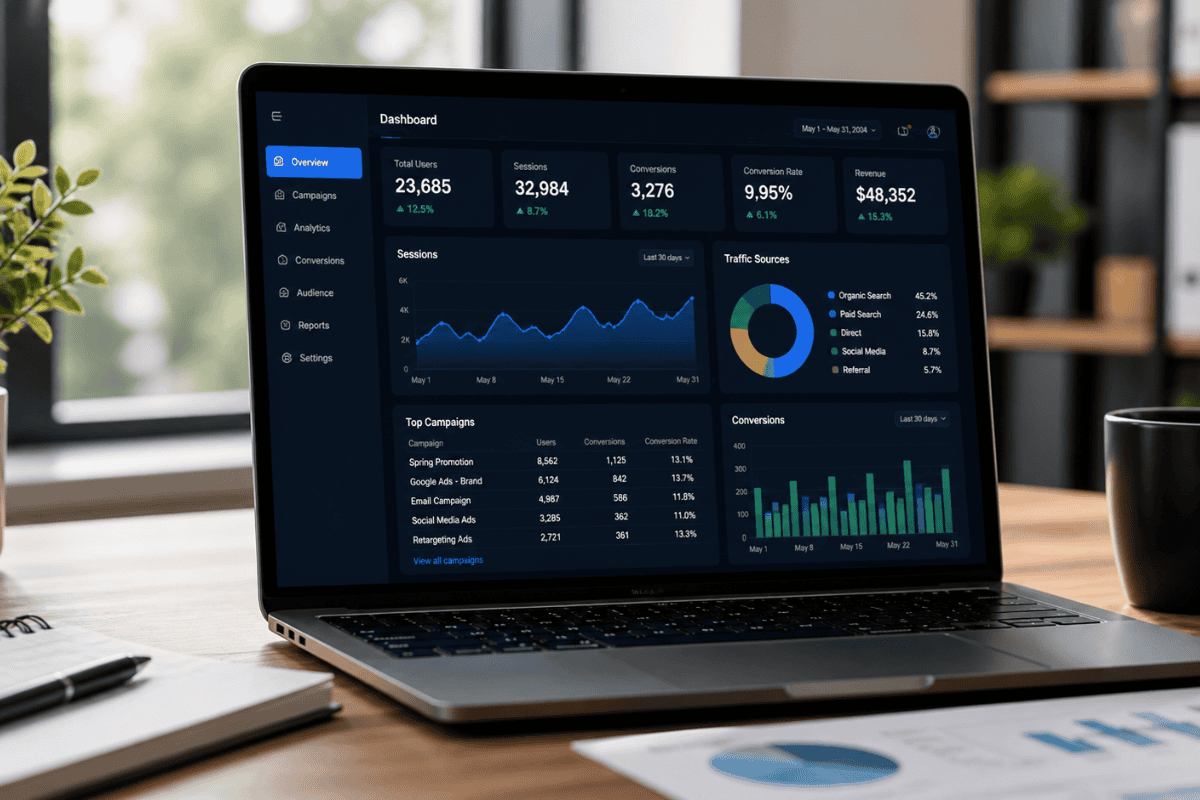
Data-driven marketing is no longer a luxury reserved for large companies with massive budgets. Today, small businesses have access to powerful analytics tools, customer insights, and performance tracking systems that allow them to compete smarter, not harder. Instead of guessing what works, you can use real data to guide every marketing decision, from content creation to campaign optimization.
The difference is simple but powerful. Businesses that rely on assumptions often waste time and money on strategies that do not deliver results. In contrast, businesses that use data-driven marketing can identify what is working, eliminate what is not, and continuously improve performance. This leads to higher conversion rates, better customer targeting, and a stronger return on investment.
In this guide, you will learn how to use marketing analytics, track the right metrics, and turn raw data into actionable insights that drive real business growth. More importantly, you will see how small businesses can use data strategically to outperform larger competitors with fewer resources.
Key Takeaways
- Data-driven marketing replaces guesswork by using real performance data to guide decisions and improve outcomes.
- Small businesses can compete with larger brands by focusing on the right metrics instead of bigger budgets.
- Tracking marketing KPIs and conversion data leads to better campaign optimization and higher ROI.
- Customer behavior data reveals opportunities to personalize messaging and increase engagement.
- Analytics tools make data accessible, allowing even small teams to build effective, scalable marketing strategies.
What Is Data-Driven Marketing? (Simple Explanation)
Data-driven marketing is the practice of using customer data, analytics, and measurable insights to guide marketing decisions. Instead of relying on assumptions or generic strategies, businesses use real information to understand what their audience wants, how they behave, and which campaigns actually drive results.
At its core, data-driven marketing connects three key elements: data collection, analysis, and action. Data is collected from sources such as your website, email campaigns, ads, and customer interactions. That data is then analyzed to uncover patterns, trends, and opportunities. Finally, those insights are used to improve marketing strategies, optimize campaigns, and increase performance.
For example, instead of guessing which ad will perform best, you can track click-through rates, conversions, and engagement metrics to determine exactly what works. This allows you to refine your messaging, target the right audience, and allocate your budget more effectively.
Modern marketing platforms make this process easier than ever. Tools like Google Analytics Academy and resources from Google Analytics Support help businesses understand how to track and interpret their data.
Ultimately, data-driven marketing is about making smarter decisions. When you understand your data, you can move from reactive marketing to proactive strategy, giving your business a clear competitive advantage.
Why Data-Driven Marketing Gives Small Businesses an Advantage
Small businesses often assume they cannot compete with larger companies due to limited budgets and resources. In reality, data-driven marketing levels the playing field. When you focus on the right data, you can make smarter decisions faster, eliminate wasted spend, and outperform competitors who rely on broad, unfocused strategies.
The biggest advantage comes from precision. Large companies may have bigger budgets, but they often move slower and rely on generalized campaigns. Small businesses can use data to identify exactly what works, double down on high-performing channels, and adapt quickly when performance changes. This agility creates a significant competitive edge.
Another key benefit is efficiency. Instead of spreading your budget across multiple channels without clear direction, data allows you to focus on what actually drives results. For example, if your website analytics show that organic search generates the highest-quality leads, you can invest more into digital marketing services that support SEO and content growth.
Data also improves customer targeting. By analyzing behavior, demographics, and engagement patterns, you can create more personalized marketing messages. This leads to higher engagement, better conversion rates, and stronger customer relationships over time.
Ultimately, the advantage is not about having more data. It is about knowing which data matters and how to act on it. Small businesses that focus on key metrics and use insights effectively can consistently outperform competitors with larger budgets but weaker strategies.
The Most Important Marketing Metrics to Track

One of the biggest mistakes small businesses make with data-driven marketing is tracking too much data without understanding what actually matters. Not all metrics are created equal. Some numbers look impressive but do not impact revenue, while others directly influence your bottom line. The key is focusing on metrics that drive real business outcomes.
Start with conversion-focused metrics. Your conversion rate shows how many visitors take action, whether that is filling out a form, booking a call, or making a purchase. This is one of the most important indicators of marketing performance because it directly reflects how effective your messaging and user experience are.
Next, track traffic sources. Understanding where your visitors come from—organic search, paid ads, social media, or email—helps you identify which channels generate the highest-quality leads. Tools like Google Analytics developers resources and insights from Think with Google can help you break down this data effectively.
Customer acquisition cost (CAC) is another critical metric. This tells you how much you are spending to acquire a new customer. When combined with conversion data, it helps you determine whether your campaigns are profitable.
Finally, track return on investment (ROI). This connects your marketing efforts directly to revenue. If a campaign generates more revenue than it costs, it is worth scaling. If not, it needs to be optimized or replaced.
By focusing on these core metrics, small businesses can simplify their analytics, make clearer decisions, and build a marketing strategy that is driven by results rather than assumptions.
Understanding Customer Behavior Data
Customer behavior data is one of the most valuable assets in data-driven marketing. It shows how users interact with your website, content, and campaigns, giving you direct insight into what captures attention, what builds interest, and what leads to conversions. Instead of guessing what your audience wants, you can observe their actions and make informed decisions based on real behavior.
This type of data includes metrics such as page views, time on site, click patterns, and navigation paths. For example, if users consistently leave a page quickly, it may indicate weak messaging or a poor user experience. On the other hand, if visitors spend time on a service page and click through to your contact form, that signals strong intent and effective content.
Behavior data also helps identify bottlenecks in your marketing funnel. You can see exactly where potential customers drop off, whether it is during the initial visit, while browsing services, or at the point of conversion. This allows you to fix specific issues instead of making broad, ineffective changes.
Another advantage is personalization. By understanding how different segments of your audience behave, you can tailor messaging, offers, and content to match their interests. This creates a more relevant experience, increasing engagement and improving conversion rates.
When used correctly, customer behavior data transforms marketing from a one-size-fits-all approach into a targeted, strategic system that aligns with how real users think and act.
Tools Small Businesses Can Use for Marketing Analytics
One of the biggest advantages of modern data-driven marketing is accessibility. You no longer need a large team or enterprise-level budget to track performance, analyze data, and improve your campaigns. Today’s analytics tools are designed to be user-friendly, scalable, and powerful enough for small businesses to compete effectively.
The most widely used tool is Google Analytics. It provides detailed insights into website traffic, user behavior, and conversion tracking. You can see where visitors come from, which pages they interact with, and how they move through your site. This makes it easier to identify high-performing content and areas that need improvement.
Google Search Console is another essential platform. It shows how your website performs in search results, including keyword rankings, impressions, and click-through rates. This data is critical for improving your SEO and aligning your content with what users are actively searching for.
For campaign tracking, tools like CRM systems and marketing platforms help you monitor leads, conversions, and customer journeys. These platforms allow you to connect your marketing efforts directly to revenue, giving you a clearer picture of what is driving growth.
The goal is not just collecting data, but turning it into actionable insights that improve performance.
With the right tools in place, small businesses can track marketing performance accurately, make data-based decisions, and continuously optimize their campaigns for better results.
How to Build a Data-Driven Marketing Strategy
Building a data-driven marketing strategy is not about collecting as much data as possible. It is about creating a system that turns the right data into clear, actionable decisions. For small businesses, the goal is simplicity, focus, and consistency rather than complexity.
The first step is defining your goals. Every strategy should start with a clear objective, such as increasing leads, improving conversion rates, or boosting revenue. Without a defined goal, your data has no direction and becomes difficult to interpret.
Next, identify the key metrics that align with those goals. For example, if your objective is lead generation, focus on conversion rate, cost per lead, and traffic sources. This ensures you are tracking performance indicators that directly impact results rather than vanity metrics.
Once your metrics are defined, set up tracking systems. This includes website analytics, conversion tracking, and campaign monitoring. Accurate data collection is critical because poor data leads to poor decisions. Tools like Google Analytics and CRM platforms help centralize this information.
From there, analyze your data regularly. Look for patterns in performance, identify which campaigns generate the best results, and pinpoint areas where users drop off. This allows you to continuously refine your approach.
Finally, take action. A data-driven strategy only works when insights are applied. This could mean adjusting your messaging, reallocating your budget, or improving your website experience. Businesses that combine analysis with execution consistently see stronger results.
For businesses looking to scale faster, working with experts through digital marketing services can help turn strategy into measurable growth.
Real-World Examples of Data-Driven Marketing in Action
Understanding data-driven marketing is one thing, but seeing how it works in real scenarios makes the impact clear. Small businesses that apply data correctly often achieve faster growth, higher conversion rates, and better use of their marketing budgets.
Consider a local service business running paid ads. Instead of continuing to spend evenly across multiple campaigns, they analyze their conversion data and discover that one specific audience segment generates most of their leads. By reallocating budget to that segment, they reduce cost per lead and increase overall ROI without increasing spend.
Another example involves website optimization. A small business reviews its analytics and notices that users frequently visit a service page but rarely submit the contact form. By analyzing behavior data, they identify friction points such as unclear messaging and weak calls to action. After improving the page structure and adding stronger conversion elements, they significantly increase lead submissions.
Email marketing also benefits from a data-driven approach. Instead of sending the same message to every subscriber, businesses can segment their audience based on behavior and engagement. This allows for more personalized messaging, which leads to higher open rates, better click-through rates, and stronger conversions.
Content marketing provides another opportunity. By reviewing search data and performance metrics, businesses can identify which topics drive traffic and engagement. This allows them to focus on high-performing content and expand on successful themes rather than guessing what to create next.
These examples highlight a consistent pattern: the advantage does not come from having more data, but from using it strategically. Small businesses that apply insights effectively can improve performance quickly and build a more predictable path to growth.
Common Mistakes Small Businesses Make With Data
While data-driven marketing offers clear advantages, many small businesses struggle to see results because of how they use data—not because of a lack of it. In most cases, the problem is not access to analytics tools, but misinterpretation, overcomplication, or focusing on the wrong metrics.
One of the most common mistakes is tracking vanity metrics. Numbers like page views, impressions, or social likes may look impressive, but they do not necessarily translate into leads or revenue. Without connecting these metrics to conversions, businesses risk making decisions that feel productive but do not drive growth.
Another issue is data overload. With so many tools available, it is easy to collect large amounts of information without a clear strategy. This often leads to confusion and inaction. Instead of trying to track everything, businesses should focus on a small set of key performance indicators that align with their goals.
Many businesses also fail to act on their data. Collecting insights without implementing changes defeats the purpose of a data-driven approach. Whether it is improving a landing page, adjusting ad targeting, or refining messaging, action is what turns insights into results.
Inconsistent tracking is another major problem. If your analytics setup is incomplete or inaccurate, the data you rely on may be misleading. This can result in poor decisions and wasted marketing spend.
Finally, some businesses rely too heavily on assumptions even when data is available. A true data-driven strategy requires trusting the insights you gather and being willing to adjust your approach based on performance.
Avoiding these mistakes allows small businesses to simplify their marketing, focus on what matters, and use data as a tool for consistent improvement rather than confusion.
How to Turn Data Into Actionable Insights
Collecting data is only the first step. The real value of data-driven marketing comes from turning that information into actionable insights that improve performance. Without action, even the most detailed analytics will not impact your results.
The process starts with identifying patterns. Instead of looking at isolated metrics, focus on trends over time. For example, if a specific landing page consistently generates higher conversions, that signals a strong combination of messaging, design, and targeting. This insight can then be applied to other pages to improve overall performance.
Next, prioritize what to act on. Not every data point requires immediate attention. Focus on areas that directly affect revenue, such as conversion rates, cost per lead, and high-traffic pages. This ensures your efforts are aligned with business growth rather than minor optimizations.
Testing is another critical step. Data should guide experimentation. If your analytics show low engagement on a page, test different headlines, calls to action, or layouts. Small changes, when guided by data, can lead to significant improvements over time.
It is also important to create a feedback loop. Every change you make should be tracked and measured. This allows you to confirm what works, refine your approach, and build a system of continuous improvement.
For example, if you notice that organic traffic is increasing but conversions remain low, the insight is clear: your visibility is improving, but your messaging or user experience needs optimization. Acting on that insight is what drives results.
Businesses that consistently turn data into action develop a competitive advantage. They are not just reacting to performance—they are actively shaping it through informed decisions.
Optimizing Campaigns Using Conversion Data
Conversion data is where data-driven marketing becomes directly tied to revenue. While traffic and engagement metrics provide useful context, conversions show whether your marketing efforts are actually generating business results. This includes actions such as form submissions, phone calls, purchases, or booked consultations.
The first step in optimization is identifying which campaigns are producing conversions. By analyzing performance across channels—such as organic search, paid ads, and email—you can determine where your highest-value leads are coming from. This allows you to shift your budget and focus toward the channels that deliver the best results.
Next, evaluate the quality of those conversions. Not all leads are equal. Some may convert into paying customers, while others do not. By tracking outcomes beyond the initial conversion, you can refine your targeting and messaging to attract more qualified prospects.
Landing page performance also plays a critical role. If a campaign generates clicks but few conversions, the issue is often the page experience rather than the traffic source. Improving clarity, strengthening calls to action, and reducing friction can significantly increase conversion rates.
A/B testing is another powerful strategy. By testing different headlines, offers, or layouts, you can use conversion data to identify what resonates most with your audience. Over time, these incremental improvements compound into substantial performance gains.
Ultimately, conversion data provides a clear feedback loop. It shows what is working, what needs improvement, and where to focus your efforts. Businesses that continuously optimize based on this data can increase efficiency, reduce wasted spend, and drive consistent growth.
The Role of Automation and Predictive Analytics
As data-driven marketing evolves, automation and predictive analytics are becoming essential tools for small businesses that want to scale efficiently. These technologies allow you to move beyond manual analysis and reactive decisions, turning your marketing into a proactive, performance-driven system.
Marketing automation simplifies repetitive tasks such as email campaigns, lead nurturing, and follow-ups. Instead of manually sending messages or tracking leads, automated workflows handle these processes in the background. This not only saves time but also ensures consistency in communication, which is critical for building trust and maintaining engagement.
For example, when a user fills out a contact form, an automated sequence can send a confirmation email, provide helpful resources, and guide them toward the next step. This creates a smoother customer journey while increasing the likelihood of conversion.
Predictive analytics takes this a step further by using historical data to forecast future behavior. By analyzing patterns in customer actions, businesses can anticipate what users are likely to do next. This allows for smarter targeting, better timing, and more personalized marketing efforts.
For instance, predictive insights can help identify which leads are most likely to convert, which campaigns will perform best, or when a customer is ready to make a decision. This level of insight allows small businesses to focus their efforts where they will have the greatest impact.
When combined, automation and predictive analytics transform data into a scalable growth engine. Instead of constantly reacting to performance, your marketing system begins to guide decisions, optimize itself, and deliver more consistent results over time.
Aligning Data With ROI and Business Growth
Data-driven marketing only becomes truly valuable when it is directly connected to return on investment (ROI) and overall business growth. Many small businesses track data but fail to tie it back to revenue, which makes it difficult to understand what is actually driving success.
The goal is to connect every marketing effort to a measurable outcome. This means going beyond surface-level metrics and focusing on how campaigns contribute to leads, sales, and long-term customer value. When you align your data with ROI, your marketing shifts from activity-based to results-driven.
Start by mapping your marketing funnel. Identify how users move from awareness to conversion, and assign measurable actions at each stage. This allows you to see where value is created and where opportunities are being missed. For example, if traffic is increasing but conversions remain flat, your growth is limited by user experience or messaging rather than visibility.
Next, calculate the return on your marketing efforts. Compare how much you invest in campaigns with the revenue they generate. This helps you determine which channels are worth scaling and which need to be optimized or eliminated. Over time, this approach leads to more efficient spending and higher profitability.
It is also important to consider customer lifetime value. A single conversion does not represent the full impact of your marketing. Repeat customers, referrals, and long-term relationships all contribute to growth. Tracking these factors provides a more accurate picture of your ROI.
Businesses that align data with financial outcomes gain a significant advantage. They can make confident decisions, invest in high-performing strategies, and build a marketing system that consistently drives measurable growth.
When to Invest in Professional Marketing Support
There comes a point where managing data-driven marketing internally becomes limiting. While many small businesses can start with basic analytics and optimization, scaling results often requires deeper expertise, advanced tools, and a more strategic approach. Recognizing when to invest in professional support can significantly accelerate your growth.
One clear sign is inconsistent performance. If your campaigns produce unpredictable results or plateau despite your efforts, it usually means there are gaps in your strategy. These gaps may involve targeting, messaging, conversion optimization, or tracking accuracy—areas that require a more experienced approach.
Another indicator is time constraints. Data-driven marketing requires ongoing analysis, testing, and optimization. If you are too busy running your business to consistently manage these tasks, your marketing performance will suffer. Delegating this responsibility allows you to focus on operations while experts handle growth.
Technical complexity is also a factor. As your strategy evolves, you may need advanced tracking setups, automation systems, and integrated analytics platforms. Without the right expertise, these systems can become overwhelming or underutilized.
Working with professionals provides clarity and direction. Instead of guessing what to do next, you gain a structured plan based on data, industry experience, and proven strategies. This leads to faster improvements and more predictable results.
If you are ready to scale, partnering with experts through professional marketing support can help you unlock the full potential of your data and turn it into measurable business growth.
Ready to Turn Data Into Real Growth?
If you are making marketing decisions without data, you are guessing. And guessing leads to wasted budget, inconsistent results, and missed opportunities. The businesses that win today are not the ones spending the most—they are the ones making the smartest decisions based on real performance insights.
Data-driven marketing gives you clarity. It shows you exactly what is working, where your leads are coming from, and how to improve your campaigns for better results. But knowing what to track is only part of the equation. The real advantage comes from turning that data into a clear, actionable strategy that drives conversions and revenue.
At Innovative Flare, we help small businesses transform raw data into measurable growth. From tracking setup and analytics to campaign optimization and conversion strategy, we build systems that deliver consistent, predictable results.
- Identify what is actually driving leads and revenue
- Eliminate wasted marketing spend
- Optimize campaigns for higher conversions
- Build a scalable, data-driven growth strategy
If you are ready to stop guessing and start growing, now is the time to act.
Book your strategy call today and get a clear plan to improve performance, increase conversions, and drive real business growth.
Frequently Asked Questions About Data-Driven Marketing
What is data-driven marketing in simple terms?
Data-driven marketing is the process of using real customer data and analytics to guide marketing decisions. Instead of guessing what works, businesses rely on measurable insights to improve campaigns, target the right audience, and increase conversions.
Why is data-driven marketing important for small businesses?
It allows small businesses to compete more effectively by focusing on what actually drives results. With the right data, you can optimize your budget, improve targeting, and make smarter decisions without needing a large marketing team.
What tools are best for tracking marketing performance?
Popular tools include Google Analytics, Google Search Console, and CRM platforms that track leads and customer interactions. These tools help you measure traffic, user behavior, and conversions in one place.
What are the most important marketing metrics to track?
The most important metrics include conversion rate, customer acquisition cost (CAC), traffic sources, and return on investment (ROI). These directly impact your business growth and revenue.
How do I start using data-driven marketing?
Start by defining your goals, setting up tracking tools, and focusing on a few key metrics. Analyze your data regularly and use insights to improve your campaigns and website performance.
What is the difference between data-driven marketing and traditional marketing?
Traditional marketing relies more on assumptions and broad strategies, while data-driven marketing uses measurable insights to guide decisions. This makes it more efficient, targeted, and results-focused.
How does customer behavior data improve marketing?
It shows how users interact with your website and campaigns, helping you understand what drives engagement and conversions. This allows you to refine your messaging and improve the user experience.
Can data-driven marketing improve ROI?
Yes, by focusing on high-performing strategies and eliminating ineffective ones, businesses can increase efficiency and generate more revenue from their marketing efforts.
What are common mistakes in data-driven marketing?
Common mistakes include tracking too many metrics, focusing on vanity data, failing to act on insights, and using inaccurate tracking setups. Avoiding these issues leads to better results.
Do I need a professional agency to use data-driven marketing?
Not necessarily, but working with experts can accelerate results. Agencies help set up advanced tracking, optimize campaigns, and turn data into a clear growth strategy.