seolounge
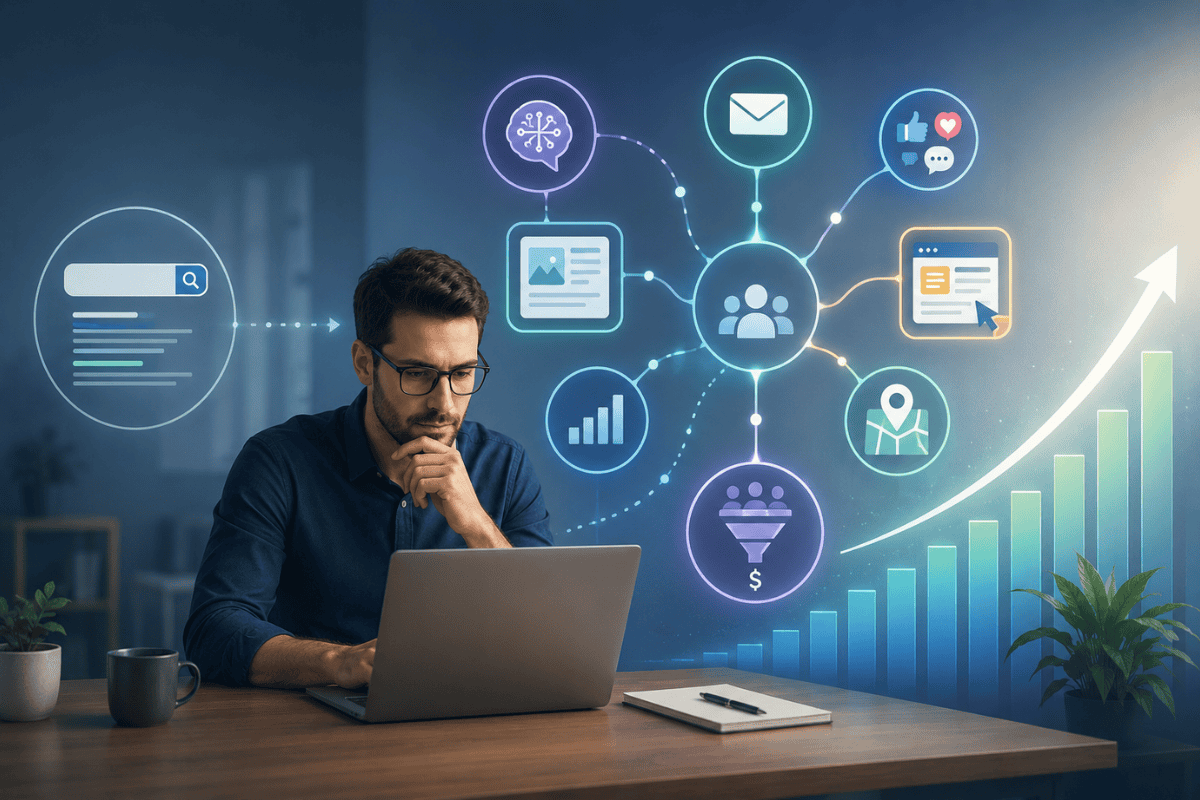
SEO is still important, but seo is not enough to drive sustainable business growth by itself. For years, small businesses relied on traditional SEO to rank on Google, attract traffic, and generate leads. That strategy still matters, but the digital landscape has changed. AI search, ChatGPT, conversational queries, social media, paid ads, email, and multi-channel customer journeys have reshaped how people discover and choose businesses.
Today, visibility is no longer just about ranking on a search results page. Your brand needs to appear across traditional search engines, AI-generated answers, local results, content platforms, inboxes, and paid channels. Traditional SEO alone no longer guarantees visibility or conversions. To grow in 2026 and beyond, business owners need a broader digital strategy that integrates SEO, GEO, AEO, content marketing, paid ads, local optimization, and conversion-focused funnels.
Key Takeaways
- SEO is still important: Search engine optimization remains a core part of digital visibility, but seo alone is no longer enough to generate consistent business growth.
- AI search has changed discovery: ChatGPT, AI models, ai-generated answers, and conversational search are changing how customers find content, compare businesses, and make decisions.
- Visibility now requires multiple channels: Small businesses need omnichannel marketing that includes SEO, social media, paid ads, email, local optimization, and content strategy.
- AEO and GEO matter: Answer Engine Optimization and Generative Engine Optimization help content appear in direct answers, ai systems, and the next evolution of search.
- Traffic is not the final goal: Rankings only matter when they connect to a conversion funnel that turns visitors into leads, customers, and revenue.
Why SEO Alone Isn’t Enough Anymore
SEO alone isn’t enough anymore because search behavior has moved beyond simple keyword searches and blue-link rankings. Customers still use Google, but they also ask ChatGPT, scan social media, compare local businesses, read reviews, watch short-form content, check emails, and interact with paid ads before making a decision. A business that depends solely on SEO is only showing up in one part of a much larger journey.
Traditional SEO focuses on helping pages rank in a search engine through keywords, technical optimization, links, and helpful content. Those fundamentals still matter, but visibility is no longer guaranteed by ranking alone. AI-driven search results, ai-generated answers, and conversational search experiences can summarize information before a user ever clicks a website. That means your content needs to be clear, structured, trustworthy, and useful enough for both humans and AI systems.
For small businesses, the risk is simple: relying only on organic traffic creates a fragile growth strategy. If rankings drop, search results change, or customers move to another channel, leads can disappear quickly. SEO should be part of a broader marketing strategy, not the entire strategy.
What Traditional SEO Used to Focus On
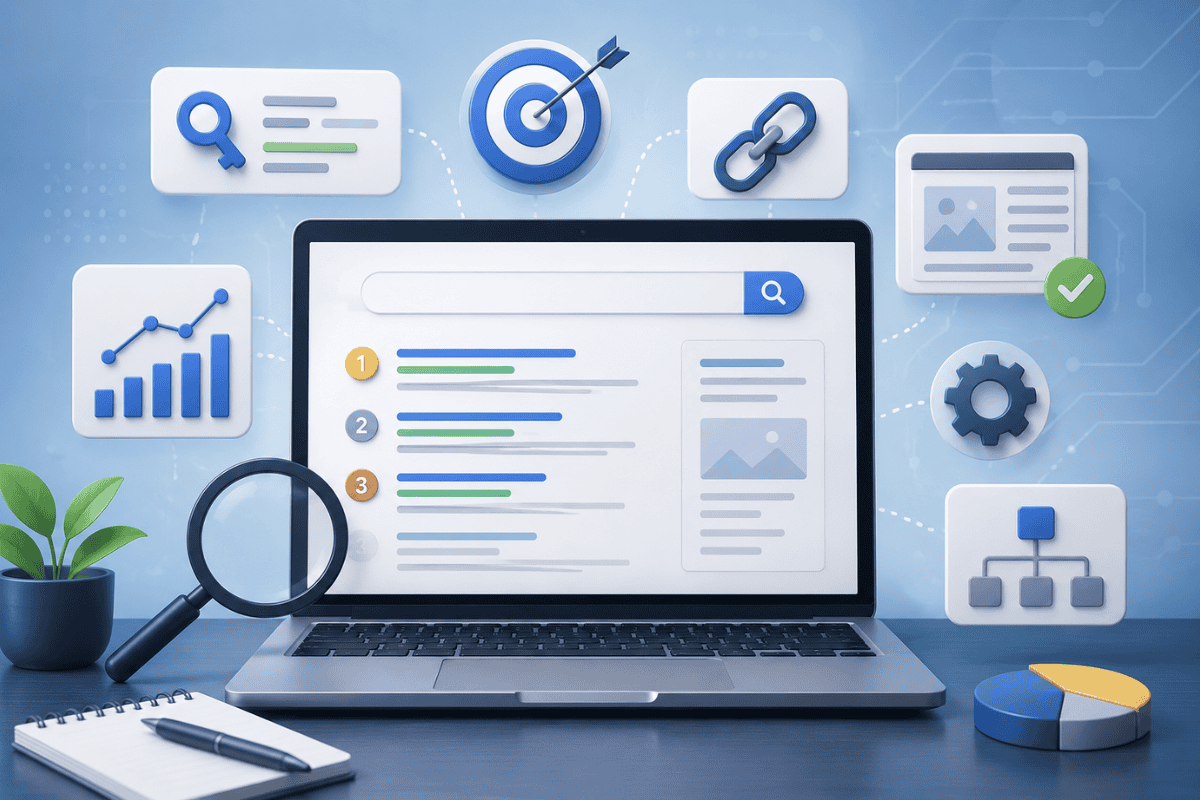
Traditional SEO was built around improving how a website appeared in search engine results. The main goal was to optimize pages for keywords, improve technical structure, earn links, and create content that matched search intent. For many years, this worked well because users typed a phrase into Google, reviewed the search results page, clicked a listing, and explored a website.
That model is still relevant, but it is no longer the full picture. Traditional SEO focuses heavily on rankings, title tags, meta descriptions, backlinks, keyword placement, and on-page optimization. Those elements remain important because they help search engines understand your business, your services, and your relevance to customer searches.
The limitation is that traditional SEO alone does not account for how people now discover information across AI tools, social platforms, local listings, paid ads, email, and conversational search. A page may rank, but if it does not answer questions clearly, build trust quickly, or guide visitors into a conversion funnel, traffic may not turn into leads. Modern SEO strategies need to support visibility, authority, and action across the full customer journey.
How AI Search Is Changing Visibility
AI search is changing visibility because users no longer rely only on traditional search results to find answers. Instead of typing short keywords and clicking several links, many people now ask conversational questions and expect direct answers. Tools like ChatGPT, AI search features, and generative engines summarize information, compare options, and often answer the question before a user visits a website.
This does not mean SEO is dead. It means SEO is changing. Search engine optimization now has to support both traditional search engine rankings and ai-generated answers. Content that clearly answers questions, explains topics in plain language, and demonstrates authority is more likely to be useful across search results, AI systems, and conversational discovery tools.
For business owners, this shift creates a new challenge. Ranking on Google may still bring traffic, but visibility is no longer about ranking alone. Your brand also needs to be understood by ai models, referenced in helpful content, supported by schema markup, and reinforced across social media, local listings, paid ads, and email. In an AI-driven search environment, businesses that optimize only for old SEO miss opportunities to appear where customers are now looking.
AEO and GEO: The Next Evolution of Search Optimization
AEO and GEO are becoming essential because customers now expect direct, useful answers instead of generic search results. AEO, or Answer Engine Optimization, focuses on structuring content so it can answer specific questions clearly. GEO, or Generative Engine Optimization, focuses on making content easier for AI engines and ai models to understand, summarize, and cite in ai-generated answers.
Traditional SEO focuses on helping pages rank in a search engine. AEO focuses on helping content become the answer. GEO focuses on helping AI systems interpret your expertise, context, services, and credibility. Together, they support the next evolution of search, where visibility is no longer about ranking only in traditional search engine results.
For small businesses, this means content needs to be more helpful, conversational, and structured. Pages should answer customer questions directly, use clear headings, include schema markup where appropriate, and connect topics to the full decision-making journey. Content that clearly explains what a business does, who it helps, and why it matters is more likely to perform across Google, AI search, ChatGPT-style tools, and other discovery channels.
Why Businesses Should Not Rely Solely on Organic Traffic
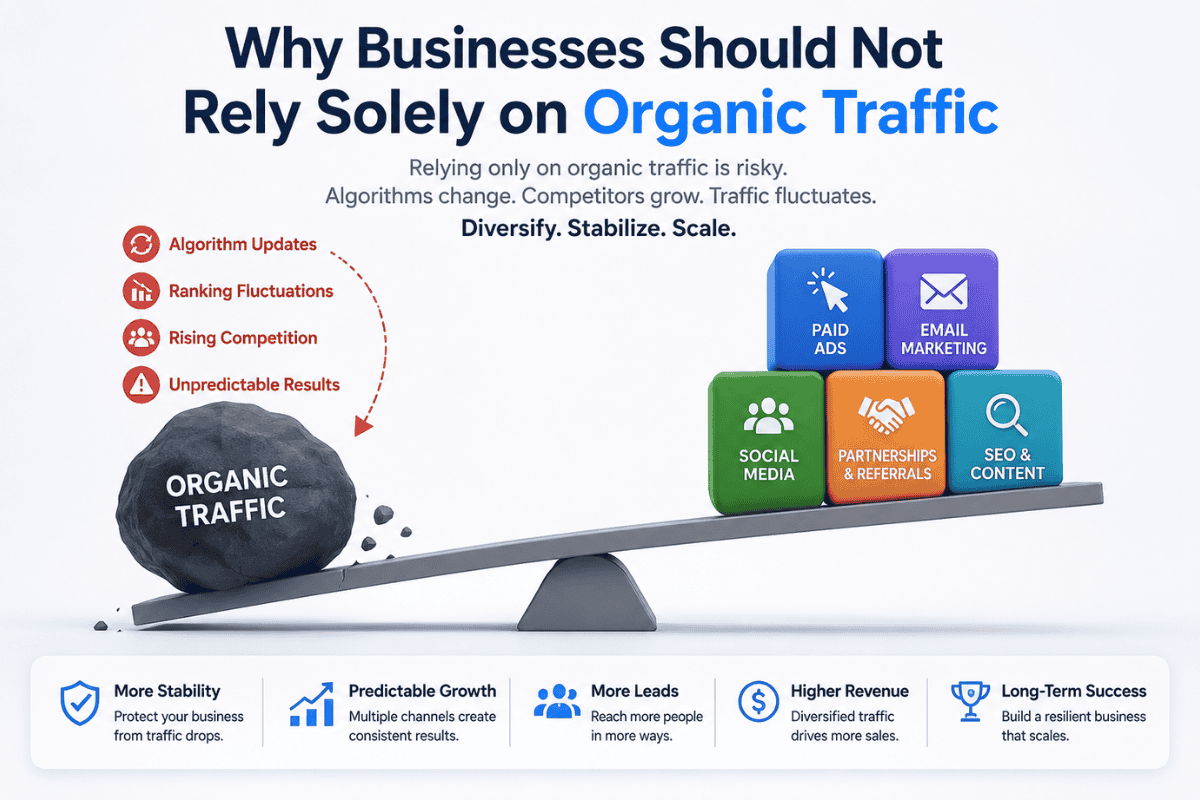
Organic traffic is valuable, but relying solely on SEO creates unnecessary risk. Search rankings can shift because of algorithm updates, competitor improvements, AI-generated answers, local map changes, or changes in customer search behavior. When one channel becomes your entire lead generation system, your business becomes vulnerable to sudden drops in visibility.
Small businesses need organic search, but they also need other ways to reach potential customers. Paid ads can create immediate visibility for high-intent offers. Social media can build brand awareness and trust before someone searches. Email can nurture leads who are not ready to buy today. Local optimization can help customers find you when they need nearby service providers. Each channel supports a different part of the customer journey.
SEO is still a powerful foundation, but it should not carry the entire marketing strategy alone. A stronger approach is to integrate SEO with content marketing, paid ads, social media, email, Google Business Profile optimization, and conversion tracking. That way, growth does not depend on one ranking, one keyword, or one traffic source.
The Role of Omnichannel Marketing in Business Growth
Omnichannel marketing helps small businesses stay visible across the places customers actually pay attention. A potential customer may first see your brand on social media, later search Google, read a blog post, compare reviews, click a paid ad, join your email list, and finally book a call. That journey is not linear, which is why seo alone isn’t enough for consistent growth.
A strong omnichannel strategy connects each channel instead of treating them as separate efforts. SEO brings long-term search visibility. Content marketing educates and builds authority. Paid ads capture demand quickly. Social media increases awareness and trust. Email nurtures leads over time. Local SEO and Google Business Profile optimization help nearby customers choose your business when they are ready to act.
This matters because visibility is no longer concentrated in one search engine results page. Customers move between traditional search, AI search, social feeds, inboxes, map listings, and direct brand interactions. When your message is consistent across those channels, your business becomes easier to recognize, remember, and trust. Omnichannel marketing turns SEO from a standalone tactic into part of a broader digital growth system.
How Paid Ads, Social Media, and Email Support SEO
Paid ads, social media, and email do not replace SEO. They strengthen it by helping your business reach customers before, during, and after they search. SEO often captures existing demand, but other channels help create demand, build trust, and keep your brand visible when prospects are not actively searching.
Paid ads are useful because they can drive targeted traffic quickly while your organic SEO strategies build momentum. They also help test messaging, offers, keywords, and landing pages before investing heavily in long-term content. Social media supports brand awareness by keeping your business active in the conversations and content feeds your customers already use. When people later see your business in Google or AI search, they may recognize the brand and feel more confident clicking.
Email marketing supports the conversion funnel after someone visits your site, downloads content, or requests information. Instead of losing that lead, email helps nurture the relationship with useful follow-ups. When these channels work together, SEO becomes part of a full digital marketing system that attracts, educates, retargets, and converts customers. For many small businesses, this integrated approach is where real growth begins.
Why Content Strategy Must Align With the Customer Journey
Content strategy matters because customers do not make decisions from one search alone. They move through stages: awareness, research, comparison, trust-building, and action. If your content only targets keywords, you may attract traffic without helping people take the next step. That is one reason seo is not enough by itself.
A strong content strategy maps topics to the full customer journey. Awareness content answers early questions. Comparison content helps prospects evaluate options. Service content explains your offer clearly. Local content builds relevance for nearby searches. Conversion content removes hesitation and guides visitors toward contacting your business.
This approach also supports AI search, AEO, and GEO. AI systems prioritize content that clearly answers questions, explains context, and connects related ideas. Instead of publishing disconnected blog posts, small businesses should explore content categories that reflect real customer needs, common objections, local intent, and buying triggers.
When content is planned around the journey, it does more than rank. It educates, builds trust, supports lead generation, and improves conversion rates. Modern content needs to serve both search engines and real customers who are deciding whether your business is the right choice.
How Schema Markup Helps AI Systems Understand Your Content
Schema markup gives search engines and AI systems clearer context about your content, business, services, FAQs, reviews, locations, and articles. While users may not see schema directly on the page, it helps machines understand what each page is about and how different pieces of information connect.
For small businesses, this matters because AI-driven search depends heavily on structured, easy-to-interpret information. If your website clearly identifies your organization, service areas, article topics, frequently asked questions, and contact details, search engines and AI tools have a better chance of understanding your relevance. Schema markup does not guarantee rankings or AI citations, but it supports stronger optimization by reducing ambiguity.
Useful schema types may include Organization, LocalBusiness, Article, FAQ, Service, Review, and Breadcrumb schema. These help clarify your brand, content, and customer journey. Combined with strong content, clean headings, internal links, and clear answers, schema becomes part of a modern SEO, AEO, and GEO strategy. Traditional SEO no longer works best when it relies only on keywords. Content needs structure, meaning, and machine-readable signals that help AI systems identify trustworthy answers.
How to Optimize Existing Content for AI-Driven Search
Optimizing existing content is often faster than creating new pages from scratch. Many small businesses already have blog posts, service pages, FAQs, and local pages that could perform better with stronger structure, clearer answers, and updated search intent. Instead of publishing endlessly, start by improving content that already has impressions, rankings, or traffic.
For AI-driven search, content needs to answer questions directly. Add concise definitions, helpful examples, comparison points, and conversational explanations. Update outdated sections, remove thin paragraphs, strengthen headings, and make sure each page clearly explains who the content is for, what problem it solves, and what action the reader should take next.
Existing content should also support GEO and AEO by making answers easy to extract and understand. Use question-based headings, FAQ sections, schema markup, and internal links to related services or resources. For example, a service page can link to relevant SEO services, digital marketing services, or a supporting blog content strategy. When content is optimized this way, it becomes more useful for people, traditional search engines, and AI systems.
Turning Visibility Into Leads With Conversion Funnels
Visibility only creates business growth when it leads to action. A website can rank well, appear in AI search, and attract traffic, but if visitors do not contact you, book a call, join your email list, or request a quote, the strategy is incomplete. This is why seo alone is not enough. Rankings are a starting point, not the final goal.
A conversion funnel guides potential customers from awareness to decision. At the top, content helps them understand a problem. In the middle, service pages, case studies, reviews, and comparison content help them evaluate your business. At the bottom, clear calls to action, contact forms, offers, and follow-up emails encourage them to become leads.
Small businesses should review every important page and ask one simple question: what should the visitor do next? If the answer is unclear, the page may lose potential customers even if it receives traffic. Strong funnels connect SEO, content marketing, paid ads, email, and web design into one growth system. When your visibility strategy is tied to lead generation, your marketing becomes more measurable, predictable, and profitable.
Building a Broader Digital Marketing Strategy
A broader digital marketing strategy gives your business more stability than relying solely on SEO. Instead of depending on one channel, it connects search engine optimization with content, paid ads, email, social media, local visibility, web design, and conversion optimization. Each piece supports the others and creates a stronger path from discovery to lead generation.
The goal is not to abandon SEO. SEO is still important because customers continue to use Google, traditional search engines, and local search when comparing solutions. The difference is that SEO strategies now need to be part of a broader system. Your website should answer questions clearly, your content should support AI search and conversational discovery, your paid ads should target high-intent prospects, and your email follow-up should keep leads engaged after the first visit.
For small businesses, this integrated approach creates better control. You are not waiting for one keyword to rank or one page to perform. You are building multiple touchpoints that help customers recognize your brand, trust your expertise, and take action. If your current marketing feels disconnected, Innovative Flare can help you align SEO, content, ads, and conversion strategy through professional digital marketing services.
Ready to Move Beyond SEO Alone?
If your business is relying solely on traditional SEO, you could already be losing visibility in AI-driven search results, social channels, local discovery, and customer inboxes. SEO is still important, but seo alone is no longer enough to build predictable growth in 2026 and beyond. Your customers are searching, comparing, scrolling, asking AI tools, reading reviews, and interacting with brands across multiple touchpoints before they ever contact you.
Innovative Flare helps small businesses build modern digital strategies that combine SEO, GEO, AEO, content marketing, paid ads, local optimization, and conversion-focused funnels. Instead of chasing rankings alone, we help you create a system designed to increase visibility, attract better leads, and turn traffic into real business opportunities.
A stronger strategy starts with understanding where your current marketing is falling short. That may include under-optimized content, weak calls to action, missing schema markup, disconnected channels, or a funnel that fails to convert visitors into leads.
If your business is ready to stop relying on SEO alone, book your strategy call today.
SEO Is Not Enough FAQs
Is SEO still important for small businesses?
Yes, SEO is still important because customers continue to use Google, local search, and traditional search engines to find services. However, seo is not enough by itself anymore. Small businesses need SEO as part of a broader strategy that also includes content marketing, AI search optimization, social media, paid ads, email, and conversion funnels.
Why is SEO alone no longer enough?
SEO alone is no longer enough because customer behavior has changed. People now discover businesses through AI-generated answers, ChatGPT-style tools, social media, Google Business Profile listings, paid ads, reviews, email, and referrals. If your business only focuses on organic rankings, you may miss prospects who are searching and comparing across other channels.
Is SEO dead?
No, SEO isn’t dead. Traditional SEO still matters, but traditional SEO alone no longer guarantees visibility or growth. The best strategies now combine search engine optimization with AEO, GEO, structured content, schema markup, brand authority, and conversion optimization so businesses can perform across both traditional search and AI-driven search.
What is the difference between SEO, AEO, and GEO?
SEO helps content rank in search engine results. AEO, or Answer Engine Optimization, helps content provide direct answers to user questions. GEO, or Generative Engine Optimization, helps AI engines understand, summarize, and potentially reference your content in AI-generated answers. Together, they support the next evolution of search visibility.
How does AI search affect SEO?
AI search affects SEO by reducing the need for users to click multiple websites for basic answers. AI systems can summarize information directly in search results or conversational tools. This means businesses need content that clearly answers questions, demonstrates expertise, uses strong structure, and supports AI understanding through schema markup and topic depth.
Should businesses still invest in traditional SEO?
Yes, businesses should still invest in traditional SEO, but not as the only growth channel. Technical SEO, keyword strategy, local optimization, content quality, and website structure still matter. The key is to integrate traditional SEO into a full digital strategy that includes paid ads, email, social media, and lead generation systems.
What channels should support SEO?
The best supporting channels include paid ads for immediate visibility, social media for awareness, email for nurturing, content marketing for education, local SEO for nearby searches, and web design for conversion. These channels help customers find, trust, and contact your business at different stages of the journey.
How can small businesses adapt to AI-driven search?
Small businesses can adapt by creating helpful content that answers customer questions clearly, optimizing existing pages, using schema markup, strengthening local profiles, building brand credibility, and mapping content to the customer journey. The goal is to make your business easy for both people and AI systems to understand.
What is the best strategy if SEO is not enough?
The best strategy is an integrated digital marketing plan that combines SEO, GEO, AEO, content strategy, paid ads, email marketing, local optimization, and conversion-focused web design. This creates multiple paths for customers to discover your brand and a clearer funnel for turning visibility into leads.