

Most customers do not convert the first time they visit your website. Before making a purchase, booking a call, or submitting a form, they usually take smaller actions that signal interest, trust, and intent. These small steps are known as micro conversions, and they can reveal what is really happening inside your marketing funnel.
For small businesses, ecommerce brands, marketers, and local service providers, tracking only the final conversion can leave major blind spots. You may know how many leads or sales you received, but not where users hesitated, what content engaged them, or which actions moved them closer to your primary goal.
By focusing on micro conversions marketing, businesses can better understand user behavior, reduce friction, improve the customer journey, and create a smoother path toward higher conversion rates and stronger return on investment.
Key Takeaways
- Micro conversions are small but meaningful actions: They show how a user interacts with your website before completing a macro conversion, such as making a purchase or booking a consultation.
- They reveal valuable insights into user behavior: Tracking micro conversions helps you understand which steps users take, where they engage, and where they drop off in the conversion funnel.
- Micro conversions help identify friction points: Form starts, product page views, video plays, newsletter signups, and cart additions can show where the user journey needs improvement.
- They support future macro conversions: Small actions that build trust often lead to larger conversion goals later, especially in service-based and ecommerce sales funnels.
- Optimization improves ROI: When you focus on micro conversions, you can refine marketing campaigns, improve user experience, increase engagement, and create higher conversion rates over time.
What Are Micro Conversions in Marketing?
Micro conversions are small actions that users take before completing a larger conversion goal. In micro conversions marketing, these actions act as process milestones that show whether a website visitor is moving forward, hesitating, or disengaging. They may not create revenue immediately, but they help explain how people interact with your content, offers, landing pages, and product or service pages.
A micro conversion might include subscribing to a newsletter, viewing a product page, clicking a phone number, starting a form, watching a video, downloading a guide, adding a product to the cart, or engaging with content on social media. Each specific action gives your business a clearer indicator of user engagement and intent.
These secondary actions matter because a macro conversion rarely happens in one step. Before someone books a consultation or makes a purchase, they usually need information, trust, reassurance, and a reason to continue. Tracking micro conversions helps you understand the incremental steps leading toward your primary conversion. Instead of guessing why users convert or leave, you can study behavior, improve the user experience, and optimize the path to a macro conversion.
Micro Conversions vs Macro Conversions: What’s the Difference?
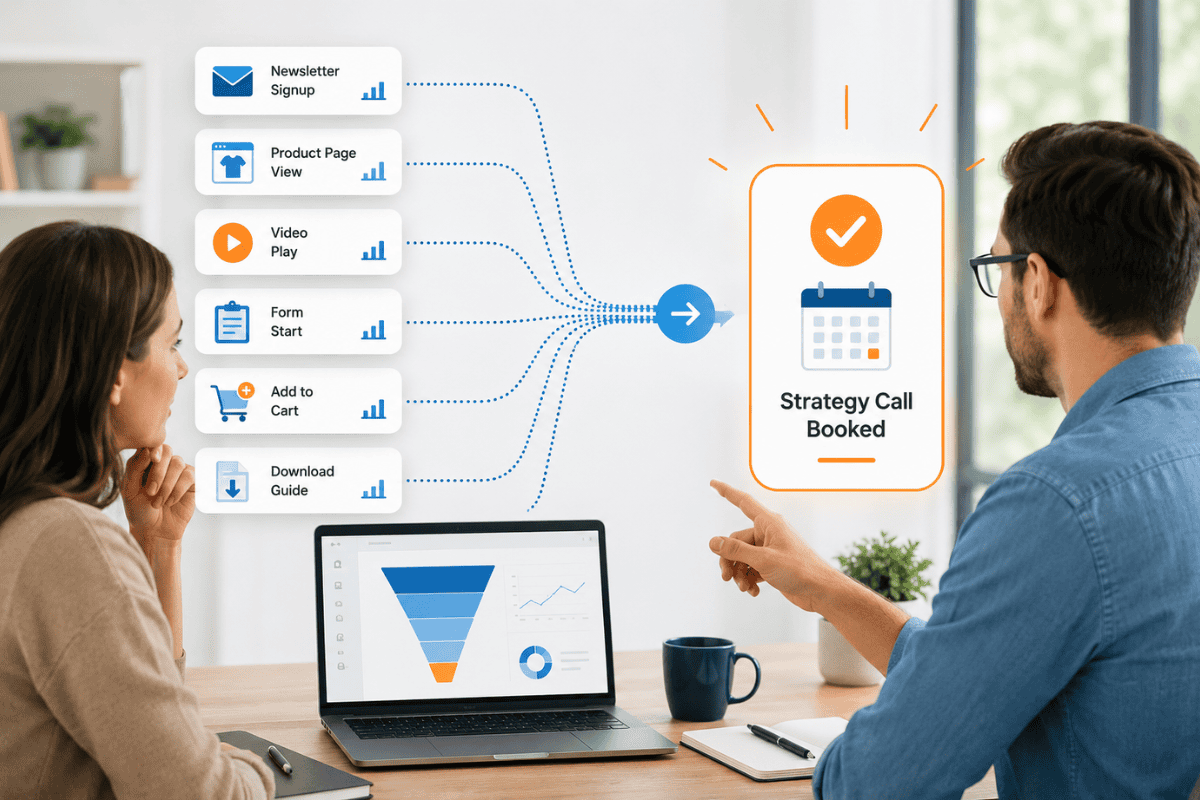
A macro conversion is the primary goal you want a user to complete. For an ecommerce business, that may be making a purchase. For a local service provider, it may be booking a consultation, submitting a quote request, or calling the business. These actions directly connect to revenue, lead generation, and business goals.
A micro conversion, by contrast, is a smaller step that happens before the ultimate conversion. Examples of micro-conversions include signing up for a newsletter, clicking a service page, viewing pricing information, adding a product to the cart, downloading a resource, or starting a contact form. These user actions do not always equal an immediate sale, but they show movement through the conversion funnel.
The difference matters because macro conversions tell you what happened at the end, while micro conversions show the steps users take along the way. If you only track final outcomes, you miss the behavior that explains why users convert or abandon the process. Tracking micro conversions gives you insight into the full user journey, helping you refine each incremental step and improve conversion optimization before the final decision happens.
Why Micro Conversions Matter in the Conversion Funnel
Micro conversions matter because they show how users move through your conversion funnel before they are ready to take the final step. A website visitor may not book a call on the first visit, but they may read a service page, click a case study, subscribe to your newsletter, or return to a product page later. Each small step gives your business valuable insight into engagement and intent.
Without tracking micro conversions, the funnel can look misleading. You may see traffic coming in and final conversions going out, but the middle of the customer journey remains unclear. That gap makes it difficult to know whether users are confused by your offer, distracted by friction points, or simply not seeing enough trust signals before deciding.
Micro conversions help connect user behavior to business goals. They reveal which pages support progress, which calls to action attract interest, and which marketing campaigns bring visitors who are likely to convert later. When you focus on micro conversions, you can refine the sales funnel with more accuracy. Instead of optimizing only for the primary goal, you improve the smaller actions that make future macro conversions more likely.
Common Examples of Micro-Conversions Businesses Should Track
The best micro conversions to track depend on your business model, website, and primary conversion goal. For ecommerce businesses, important user actions may include viewing a product page, selecting a product option, adding a product to the cart, starting checkout, or using a discount code field. These small steps show whether shoppers are interested, comparing options, or encountering friction before making a purchase.
For service-based businesses, common examples of micro-conversions include clicking a phone number, visiting a contact page, opening a booking calendar, starting a lead form, downloading a guide, or subscribing to a newsletter. These actions often indicate that a website visitor is considering your product or service but needs more trust, clarity, or follow-up before becoming a lead.
Engagement-based micro conversions also matter. Video plays, blog scroll depth, social media clicks, repeat visits, and email signups can show how users interact with your brand before they are ready to convert. The goal is not to track every possible metric. The goal is to identify the secondary actions that connect most closely to your customer journey, marketing strategy, and future macro conversions.
How Micro Conversions Reveal User Behavior and Intent
Micro conversions reveal what users are thinking before they are ready to complete a primary conversion. When someone reads multiple service pages, watches a product video, starts a form, or returns to a landing page, those actions create signals. Each signal helps you understand user behavior, engagement level, and likely intent within the conversion funnel.
This is where marketing analytics becomes more useful than basic traffic reports. Page views alone may tell you that people visited your website, but micro conversion tracking shows what they did next. Did they compare services? Did they click pricing? Did they abandon a form halfway through? Did they subscribe to your newsletter after reading educational content? These user actions provide valuable insights into what motivates users and what may be stopping them.
For small businesses, these insights can shape smarter marketing decisions. A high number of product page views but few cart additions may point to weak product descriptions, unclear pricing, or missing trust signals. Strong blog engagement but low lead generation may suggest the need for better calls to action. Tracking micro conversions helps turn behavior into strategy, allowing you to optimize based on evidence instead of assumptions.
Finding Friction Points Before They Cost You Sales
Friction points are the moments where users slow down, hesitate, or leave before completing a conversion goal. They can appear anywhere in the funnel, from a confusing landing page to a long checkout process, unclear pricing, weak calls to action, or a form that asks for too much information. Tracking micro conversions helps reveal those problems before they quietly reduce sales and leads.
For example, if many users begin a form but few submit it, the form may feel too complicated. If shoppers add a product to the cart but rarely continue to checkout, shipping costs, payment options, or trust signals may be creating hesitation. If users view a product page but do not click deeper, the page may need stronger images, clearer benefits, or better proof.
Micro conversions can help identify where the user experience breaks down. Instead of assuming the entire marketing strategy is failing, you can isolate the specific action where users stop progressing. This makes conversion optimization more precise. By improving one step at a time, businesses can reduce friction, increase engagement, and create a smoother path toward higher conversion rates.
How Micro Conversions Support Future Macro Conversions
Future macro conversions often begin with small steps that build confidence. A user may not be ready to make a purchase, book a call, or request a quote during the first visit. However, when they watch a video, compare a product page, save an item, download a guide, or subscribe to your newsletter, they are creating a path to a macro conversion later.
These incremental steps matter because trust develops over time. A visitor who reads helpful content, clicks through multiple pages, and returns after an email follow-up is showing stronger intent than someone who lands once and leaves. Micro conversions help you recognize that momentum before the final conversion happens.
This is especially important in service-based marketing, ecommerce, and high-consideration purchases. The larger the decision, the more likely users are to need repeated touchpoints before acting. By tracking micro-conversions, businesses can see which actions that users take are most closely connected to future macro conversions. That insight helps refine messaging, improve user experience, and create more effective follow-up campaigns. When small actions are optimized, the ultimate conversion becomes easier, more natural, and more likely.
Using Micro Conversions to Improve Lead Generation
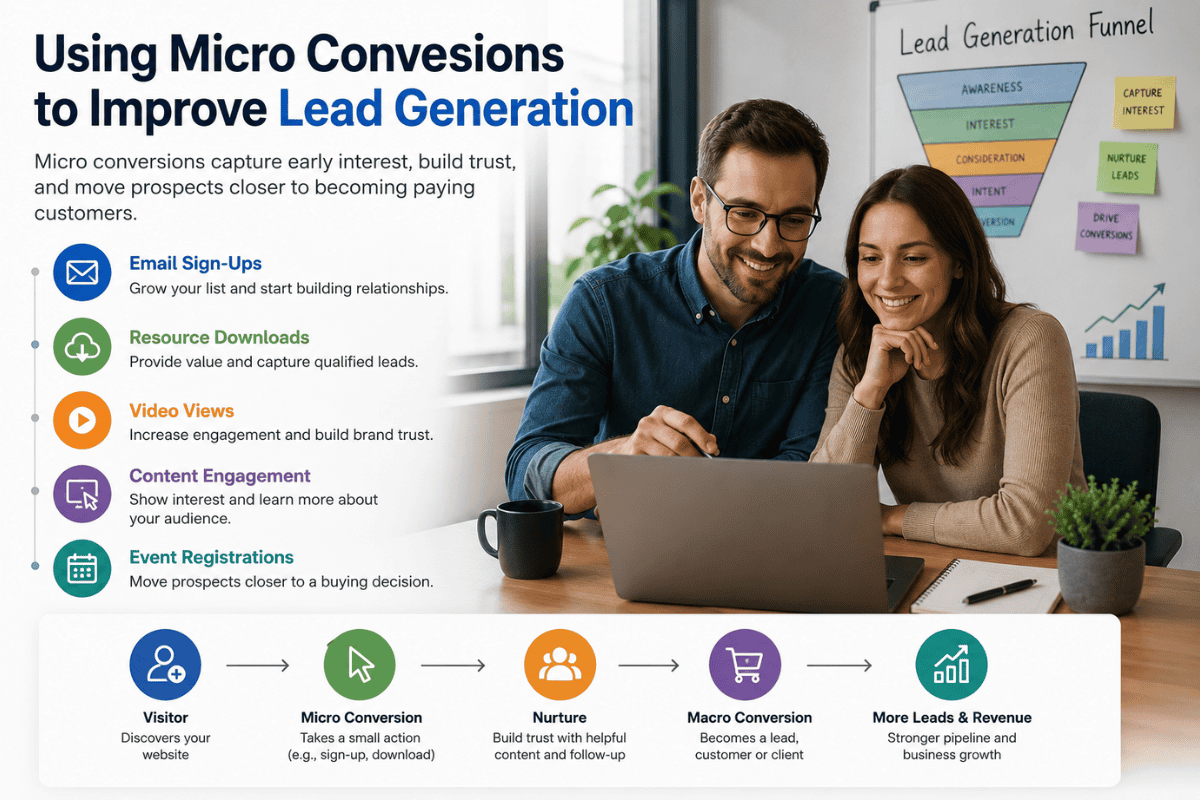
Micro conversions are powerful for lead generation because they show which users are moving from casual interest to active consideration. Someone who subscribes to your newsletter, downloads a checklist, clicks a consultation button, or starts a form may not become a lead immediately, but that action shows they are closer to your product or service than a passive visitor.
These signals help businesses prioritize follow-up and refine the lead tracking process. For example, a local service provider may notice that visitors who read two service pages and then open the contact page are more likely to book a call. An ecommerce brand may see that users who save products or join a discount list often convert after a retargeting campaign or email sequence.
Micro conversions help turn anonymous engagement into measurable intent. Instead of treating every website visitor the same, you can segment audiences based on the actions they take. This makes your marketing strategy more relevant, your messaging more timely, and your conversion optimization more effective. When lead generation is built around real user behavior, every small action becomes a chance to guide prospects toward becoming qualified leads.
How to Track Micro-Conversions With Analytics Tools
Tracking micro conversions starts by defining which user actions matter most to your funnel. Instead of measuring every click, choose the small steps that connect to your business goals, such as newsletter signups, form starts, product page views, video plays, cart additions, booking calendar clicks, or downloads. Each micro conversion should connect to a clear conversion goal.
Analytics tools make this process measurable. Google Analytics events can help track specific actions users take on your website, while Google Analytics reporting helps connect engagement metrics to traffic sources, landing pages, and campaigns. Tools like Microsoft Clarity can add behavior insights through heatmaps and session recordings, helping you see where users click, scroll, hesitate, or abandon the process.
The key is to track micro-conversions consistently and review them in context. A high micro conversion rate on one landing page may reveal strong intent, while a sharp drop-off after a form start may reveal friction. When analytics tools are connected to real business goals, micro conversions become actionable signals for optimization.
Optimizing Landing Pages and Product Pages for Small Steps
Landing pages and product pages perform better when they guide users toward incremental steps instead of demanding an immediate final conversion. A first-time visitor may not be ready to buy, book, or submit a full lead form. However, they may be willing to view pricing, compare options, watch a short video, read reviews, click a frequently asked question, or add a product to the cart.
To optimize these pages, start by matching each page to one clear user action. A landing page for a service offer might focus on consultation button clicks, form starts, or guide downloads. A product page might focus on image views, option selections, cart additions, or review engagement. These micro conversion actions show whether users understand the offer and feel confident enough to continue.
Strong page optimization also reduces friction. Use clear headlines, concise benefits, visible trust signals, simple forms, fast-loading design, and calls to action that match the customer journey. When each page supports the next small step, users feel less pressure and more control. That creates a better user experience, stronger engagement, and a more reliable path toward the primary conversion goal.
How Engagement Metrics Improve Marketing Campaigns
Engagement metrics help you understand whether your marketing campaigns are attracting users who are likely to take meaningful action. Traffic volume alone does not prove that a campaign is working. A paid ad, social post, email campaign, or SEO landing page may bring visitors to your site, but micro conversions show whether those visitors are actually interested.
Metrics such as scroll depth, video plays, button clicks, product page views, newsletter signups, form starts, and repeat visits can reveal campaign quality. For example, one campaign may generate fewer clicks but a higher micro conversion rate, meaning it brings more qualified users. Another campaign may produce a large number of visits but little engagement, suggesting that the message, audience, or landing page needs to be refined.
This insight helps businesses improve conversion optimization across digital marketing channels. Instead of judging performance only by final leads or sales, you can evaluate the steps leading to those outcomes. Engagement and conversion data can guide better targeting, stronger offers, clearer creative, and more effective follow-up. When marketing campaigns are refined around user behavior, every channel becomes more accountable, measurable, and connected to real business growth.
Building Trust Through Secondary Actions
Many micro conversions are actions that build trust before a user is ready to complete a larger conversion. When someone reads reviews, clicks a case study, watches a demo video, downloads a guide, joins a newsletter, or compares service details, they are reducing uncertainty. These secondary actions help users feel more informed and confident as they move through the customer journey.
Trust is especially important when the purchase requires time, money, or commitment. A local service provider may need to prove credibility before someone books a consultation. An ecommerce brand may need to show product quality, return policies, reviews, and shipping details before a shopper feels safe making a purchase. Each trust-building action gives the user another reason to continue.
Businesses should treat these small steps as part of the conversion process, not distractions from the primary goal. If users consistently engage with testimonials, FAQs, portfolio examples, or educational content before converting, those assets should become more visible across the funnel. Micro conversions help identify which trust signals matter most. When you strengthen those signals, you reduce friction, improve user experience, and make the path to a macro conversion feel easier and more credible.
Retargeting and Email Marketing After Micro Conversion Actions
Micro conversion actions can power stronger retargeting and email marketing because they show what a user has already expressed interest in. A visitor who viewed a product page, started checkout, clicked a service offer, downloaded a guide, or subscribed to your newsletter should not receive the same follow-up as someone who only visited the homepage once.
Retargeting works best when it reflects the user journey. If someone added a product to the cart but did not complete checkout, an ad or email can address objections such as shipping, product benefits, reviews, or limited-time incentives. If someone started a consultation form but did not submit it, a follow-up campaign can reinforce trust, simplify the next step, or highlight the value of booking a strategy call.
Email marketing also becomes more effective when it is triggered by behavior. Newsletter subscribers can receive educational content, product browsers can receive comparison guidance, and form starters can receive reassurance-focused follow-ups. These campaigns keep users engaged after the first visit and guide them toward future macro conversions. When micro conversions are connected to smart follow-up, small actions become part of a larger conversion optimization system.
Turning Micro Conversion Insights Into Higher ROI
Micro conversion insights improve return on investment because they show where small changes can create larger results. Instead of spending more money on traffic, businesses can often increase performance by improving the steps users already take. A clearer call to action, shorter form, stronger product page, better email follow-up, or more relevant landing page can lift engagement and conversion rates without increasing ad spend.
This is where conversion optimization becomes more strategic. If analytics show that users frequently watch a video before submitting a lead form, that video should be placed near more important calls to action. If newsletter subscribers are more likely to become customers, your marketing campaigns should promote subscribing to your newsletter more intentionally. If cart additions are strong but purchases are weak, checkout friction may be costing revenue.
Micro conversions help businesses make decisions based on behavior instead of assumptions. Over time, these incremental improvements compound across the funnel. More users take the next step, more leads receive relevant follow-up, and more prospects reach the primary goal. The power of micro conversions is that they turn hidden user actions into measurable opportunities for higher conversion rates, better customer journeys, and stronger marketing ROI.
Optimize Your Funnel With Innovative Flare
If you are only tracking final conversions, you could be missing valuable insights into why users are dropping off before they ever become leads or customers. A low macro conversion rate does not always mean your offer is weak. It may mean users are hitting friction points earlier in the funnel, missing trust signals, or lacking the right follow-up after taking a micro conversion action.
Innovative Flare helps small businesses turn marketing analytics into practical conversion optimization. We look at the full customer journey, including landing page behavior, product page engagement, lead tracking, user experience, secondary actions, and the incremental steps that move users toward your primary goal. That means your marketing strategy becomes clearer, more measurable, and more focused on real business growth.
Small improvements across the funnel can create meaningful gains in engagement, conversion rate, lead generation, and return on investment. Let’s optimize your funnel, improve engagement, and turn more small actions into real business growth. Book your strategy call today.
Frequently Asked Questions About Micro Conversions Marketing
What are micro conversions in marketing?
Micro conversions are small user actions that happen before a larger conversion goal. Examples include newsletter signups, product page views, video plays, form starts, downloads, cart additions, and contact page visits. They help businesses understand how users move through the conversion funnel before completing a macro conversion.
Why are micro conversions important?
Micro conversions are important because they reveal user behavior, engagement, and intent. If you only track final conversions, you may miss the small steps that explain why users continue, hesitate, or drop off. Tracking micro conversions helps businesses identify friction points and improve conversion optimization.
What is the difference between a micro conversion and a macro conversion?
A macro conversion is the primary goal, such as making a purchase, booking a call, or submitting a lead form. A micro conversion is a smaller action that supports that goal, such as viewing pricing, subscribing to a newsletter, adding a product to the cart, or clicking a call to action.
What are examples of micro-conversions?
Common examples of micro-conversions include viewing a product page, signing up for a newsletter, starting checkout, clicking a phone number, downloading a guide, watching a video, reading reviews, starting a form, sharing content on social media, or returning to a landing page.
How do you track micro-conversions?
You can track micro-conversions using analytics tools such as Google Analytics, event tracking, heatmaps, session recordings, CRM data, and email marketing reports. The most important step is choosing actions that connect to your business goals and setting them up as measurable events or conversion goals.
Do micro conversions improve conversion rates?
Yes. Micro conversions can help improve conversion rates by showing where users engage and where they experience friction. When businesses optimize small steps such as form starts, cart additions, CTA clicks, and page engagement, more users are likely to complete future macro conversions.
How do micro conversions help ecommerce businesses?
For ecommerce businesses, micro conversions show how shoppers interact before making a purchase. Product page views, image clicks, size selections, cart additions, wishlist saves, and checkout starts reveal buyer intent and help identify problems with product pages, pricing, trust signals, or checkout flow.
How do micro conversions help service businesses?
For service businesses, micro conversions help identify prospects who are moving toward lead generation. Contact page visits, consultation button clicks, guide downloads, newsletter signups, and form starts show which users are actively considering a product or service and may need follow-up.
Should every micro conversion be tracked?
No. Tracking too many actions can create noise. Focus on micro conversions that show meaningful progress in the customer journey. The best actions to track are the ones that connect directly to your conversion funnel, lead tracking, marketing strategy, and primary conversion goal.