

Maria runs a small orthodontic practice outside West Palm Beach. Last month she pulled up her website analytics for a routine check and saw a referral source she didn’t recognize: perplexity.ai. A handful of visits, nothing dramatic, but new. A week later a patient mentioned, almost in passing, that she’d found the practice by asking “some AI thing” which orthodontist in the area took her insurance and had Saturday appointments.
That AI thing was Perplexity. And it’s not Google. It’s not ChatGPT either, even though it gets lumped in with both in casual conversation.
If you’ve never used Perplexity yourself, you’re not behind. Most business owners haven’t. But it’s quietly become a real, trackable, distinct source of referral traffic, and checking your own visibility on it takes about ten minutes, less time than most owners spend deciding what to post on Instagram this week. This guide walks through what Perplexity actually does differently, how to see where you currently stand, and what honestly moves the needle versus what’s just noise sold by AI visibility vendors.
Key takeaways
- Perplexity searches the live web for most queries and cites its sources. It isn’t just answering from memory the way some AI chatbots do.
- It’s a distinct, and growing, referral channel. Separate from Google, separate from ChatGPT, worth checking on its own.
- You can check whether your business shows up in Perplexity yourself, with no paid tool, in about ten minutes.
- If PerplexityBot is blocked in your robots.txt file, you’re excluded from citation consideration entirely. That’s a simple, checkable technical item.
- No one, including companies selling AI visibility audits, can guarantee you’ll be cited. Be skeptical of anyone who claims otherwise.
- Freshness, clear direct answers, and schema markup are the honest best-practice levers. There’s no known formula to game.
What Perplexity actually is
Most people’s mental model of an AI tool is something like ChatGPT circa its early releases: you ask a question, it answers from whatever it learned during training, and the information might be months or years old depending on the model’s cutoff date. Perplexity works differently, and that difference is the whole reason it’s worth understanding as its own thing rather than filing it under “AI search, generally.”
Rather than relying mainly on static training data, Perplexity performs real-time web retrieval for most queries. When you ask it something, it’s actively pulling current pages from the live web, synthesizing an answer from what it finds across multiple sources, and then showing you exactly where that answer came from. This is the retrieval-augmented approach, often shortened to RAG in technical discussions: instead of generating text purely from memorized patterns, the AI model retrieves real documents first and grounds its answer in them. Ask it something time-sensitive, like which restaurants near you currently have same-day reservations, and it’s checking live pages, not recalling a snapshot from months ago.
The citation part matters as much as the retrieval part, maybe more. Perplexity displays clickable source citations directly in its answers, in a visible source panel you can expand and click through line by line. Multiple independent sources have described this as more transparent than how some competing AI tools handle citation, where sources get buried, generalized into a vague “based on various sources,” or left out of the answer entirely. If a customer asks Perplexity “best HVAC company near me that does same-day service” and your business gets named, you can usually trace exactly which page on your site got cited and why, right down to the specific paragraph.
Perplexity also documents its own crawler, called PerplexityBot, which indexes sites specifically for this citation purpose. There’s a second, separate agent called Perplexity-User, used for on-demand fetches triggered by an actual user’s query in the moment, rather than routine background indexing. The distinction matters more once you get into the technical prerequisites further down, but it’s worth knowing both exist and that they serve different functions.
None of this makes Perplexity inherently better than ChatGPT or Google. It makes it different enough that your visibility on one tells you close to nothing reliable about your visibility on the other. That’s the entire premise of this article: they’re separate things, and separate things need to be checked separately.
Why it matters for a small business

Here’s the part that’s easy to dismiss: Perplexity’s total traffic is nowhere near Google’s. If you’re comparing raw numbers, Google search still dwarfs it, and probably will for a while. But that’s the wrong comparison to make, and it’s the one most business owners default to.
The right comparison is against zero. Right now, most small businesses have done nothing to check or influence how they show up in Perplexity, which means the businesses that do check are working against an unusually low bar. A distinct referral source, even a smaller one, is still a referral source you’re either capturing or leaving on the table. And unlike a lot of paid channels, checking your visibility here costs nothing but ten minutes.
It’s also a different kind of intent. Someone typing a comparison question into Perplexity, something like “which plumbers in Palm Beach County have the best reviews for emergency calls,” is often further along in their decision than someone doing a generic Google search. They’re already synthesizing options, weighing names against each other before they’ve clicked on anything. If your business gets named in that synthesis, you’re not competing against ten blue links on a results page, you’re one of maybe three or four names the AI decided were worth mentioning at all.
Think about how a customer actually uses this. Someone asks Perplexity to compare local dentists, gets three names back with a sentence each on what makes them different, and picks up the phone. There was no scrolling, no second page of results, no ad they scrolled past. Just a shortlist, and you were either on it or you weren’t.
None of that is a reason to panic about your Perplexity visibility, or to hire the first AI SEO vendor who cold-emails you promising guaranteed placement. It’s a reason to spend the ten minutes it takes to actually look at where you currently stand.
How do you check if your business shows up in Perplexity?
Skip the vendor dashboards for now. You can do this yourself, and you should, before paying anyone to tell you what you can see directly with a free account and ten minutes.
Start with your own business name. Open Perplexity and search your business name directly, the way a customer who half-remembers you would. If your business doesn’t come up at all, or comes up with outdated or wrong information, like an old address or a phone number you stopped using two years ago, that’s your first data point. Note whether an answer appears, and if it does, click through the source panel to see which of your pages, if any, got cited, and how current that page actually is.
Next, ask the comparison questions your customers are actually likely to ask. Not “tell me about [your business],” but the kind of query a real prospect types when they’re choosing between you and a competitor. A roofing company should try something like “best roofing contractors in West Palm Beach for hurricane damage repair.” A dental practice should try “dentist near me that takes new patients same week.” A hair salon might try “best balayage salon in Palm Beach County.” Run two or three of these, specific to your industry and area, and pay attention to whether you’re named at all, and if so, where in the answer and alongside which competitors.
Then check your website analytics for referral traffic specifically from the perplexity.ai domain. This is separate from checking Google Search Console, which only reports Google Search performance and will show you nothing about Perplexity referrals no matter how you slice the data or which report you dig into. If you’re using Google Analytics or a similar tool, filter your referral or acquisition report by source and look specifically for perplexity.ai. Even a small number of sessions, five or ten a month, tells you real people are already arriving from AI-generated answers, not just hypothetical future customers you’re guessing about.
One more thing worth trying: ask Perplexity a broader question about your industry in your specific area, without naming any business at all, and see who it surfaces. Something like “who are the best HVAC companies in Palm Beach County.” This tells you who’s currently winning the citation game in your market, competitors included, which is often more useful diagnostic information than knowing whether you personally appear. If a competitor shows up consistently and you don’t, that’s worth investigating rather than ignoring.
Basic technical prerequisites
Before you worry about optimization, confirm you’re not accidentally blocking yourself out entirely. This is the single most overlooked item in AI visibility work, mostly because it’s boring and technical enough that people assume someone else already checked it, or that it was handled once and never needs revisiting.
Perplexity’s crawler, PerplexityBot, needs to be able to access your site for your pages to be eligible for citation at all. If your robots.txt file blocks PerplexityBot, whether that block was set intentionally or added years ago by a developer trying to block “AI scrapers” in general during an earlier, more anxious moment about AI crawling, your site is excluded from Perplexity’s citation pool for that content. Not deprioritized. Not ranked lower. Excluded entirely.
Checking this takes about thirty seconds. Go to yourdomain.com/robots.txt in your browser and look for any line referencing PerplexityBot with a Disallow directive next to it. If you see one, that’s a conversation to have with whoever manages your site, ideally today rather than after you’ve spent time and money on content optimization that a blocked crawler will never see in the first place.
It’s also worth remembering that PerplexityBot and the separate Perplexity-User agent serve different functions, and a robots.txt file might handle them differently. PerplexityBot handles routine indexing for future citation. Perplexity-User handles on-demand fetches when someone’s live query needs a fresh look at a specific page right now, in real time. Blocking one doesn’t necessarily block the other, so if you’re troubleshooting a visibility gap, check your robots.txt for both agent names specifically, not just whichever one you happened to remember.
What actually improves citation odds
Here’s where a lot of content online gets dishonest. Search “how to rank on Perplexity” and you’ll find no shortage of articles citing proprietary “studies,” named internal frameworks with impressive-sounding titles like trust scores or citation gates, and suspiciously precise statistics about exactly how many citations a given method produces. Most of that is marketing from companies selling AI visibility audit tools, dressed up to look like independent technical research. Perplexity doesn’t publish a deterministic citation formula, and nobody outside the company has reverse-engineered one, whatever a sales page implies.
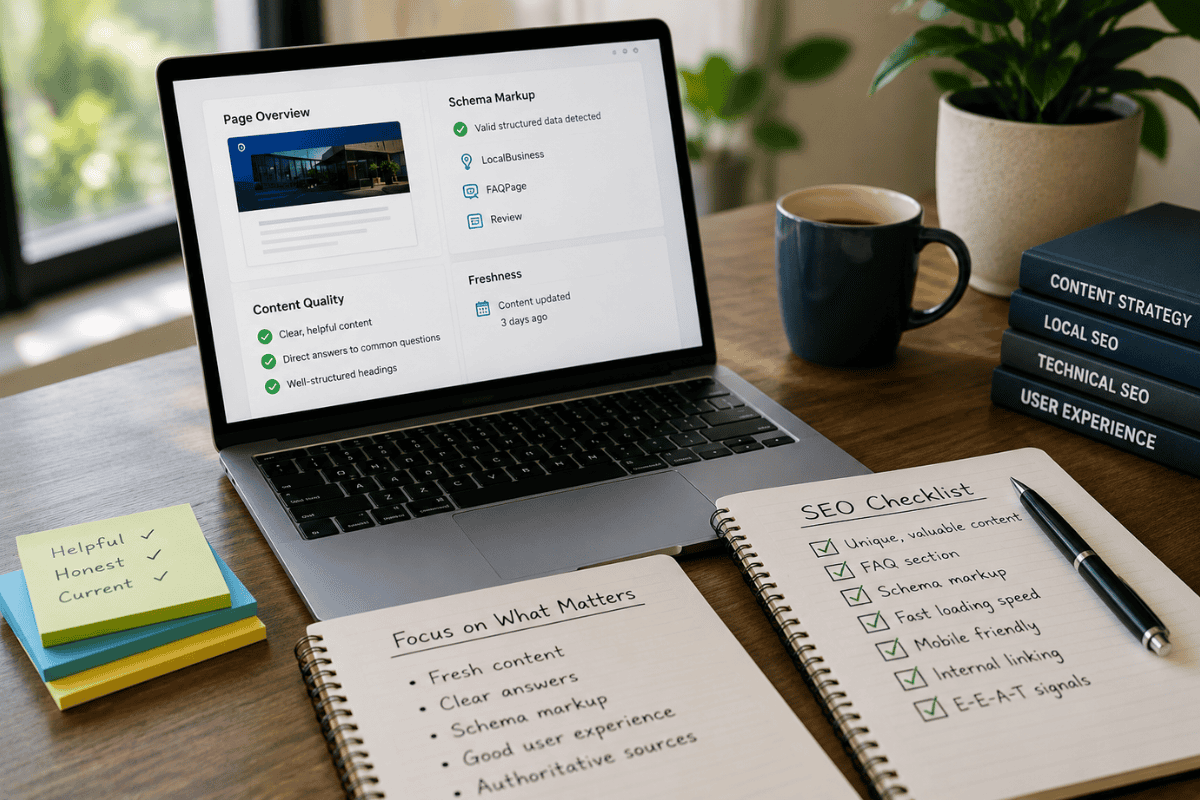
What does exist is a general, honest consensus across multiple credible sources on the kinds of things that plausibly help, without any guarantee attached.
- Freshness. Content that’s been updated recently, with a visible date, tends to be favored over content that hasn’t been touched in years. This tracks with the retrieval-based approach: Perplexity is pulling from the live web, so stale, outdated pages are a weaker match for current queries. A service page last edited in 2021 is a weaker candidate than one updated this quarter.
- Direct-answer structure. Pages that answer a clear question early and plainly, rather than burying the answer under three paragraphs of preamble, are more likely to be cited. If someone asks “does this dentist accept Medicaid,” a page that states the answer in the first sentence of a relevant section is easier for an AI system to extract and quote than a page that makes the reader hunt for it through several paragraphs of general practice history first.
- Schema markup. Structured data, things like Article schema and FAQPage schema, gives AI systems and traditional search engines alike a clearer, machine-readable signal about what a page contains and how it’s organized, separate from how a human reader would parse it visually.
- Domain authority and backlink profile. This isn’t unique to Perplexity. It’s a long-standing traditional SEO signal that still appears to carry weight in an AI retrieval context, likely because authority signals help any system, human or algorithmic, gauge trustworthiness when synthesizing an answer from multiple competing sources.
- General content quality. Original information, specific detail, and clear writing that answers a real question tend to outperform generic, padded content, in both traditional search results and AI-generated answers alike.
None of these are secret. They’re mostly the same fundamentals that have mattered in traditional SEO for years, applied to a system that happens to retrieve and cite in real time instead of indexing and ranking on a static algorithm update schedule. If a vendor is telling you they’ve found a hidden lever nobody else knows about, that’s a reason for skepticism, not excitement, and it’s usually worth asking them directly what independent source backs the claim.
The Cloudflare stealth-crawling story
If you want a concrete example of why AI search visibility isn’t a fully mature, predictable discipline yet, this one is worth knowing, and it’s more recent than most of what gets written about this topic.
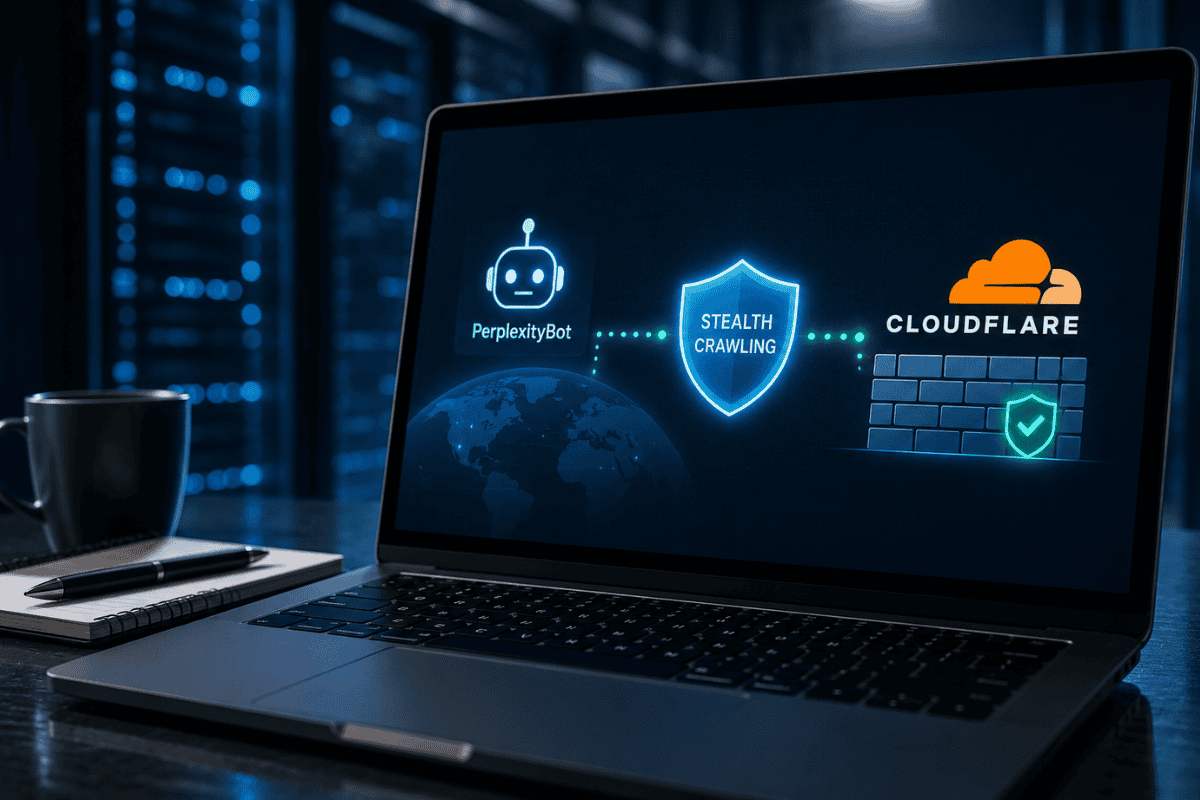
In January 2026, Cloudflare documented stealth-crawling behavior from Perplexity, including modified user agents and rotating IP addresses that appeared to be used specifically to get around robots.txt blocks that site owners had deliberately put in place. In plain terms: some sites had explicitly told Perplexity’s crawler not to access their content, using the standard, universally respected robots.txt mechanism, and Cloudflare’s findings suggested Perplexity accessed it anyway, using techniques designed to disguise the requests as something other than PerplexityBot.
Cloudflare subsequently removed Perplexity from its verified bot list, a meaningful and public step for a company that provides infrastructure and bot-verification services to a large share of the web, including many small business websites that may not even realize they’re protected by it. As of mid-2026, the situation remained unresolved, with no detailed public response from Perplexity addressing Cloudflare’s specific findings point by point.
Why does this matter to a small business owner who just wants to know if their landscaping company shows up in an AI answer? Because it’s a reminder that the rules of this space are still being written, sometimes contentiously, between the companies operating in it. The technical guidance in this article, like checking your robots.txt, is accurate and worth following today. But it’s guidance for a system that is, by multiple accounts including this one, still evolving in ways that even sophisticated infrastructure companies with far more resources than a small business are actively pushing back on in public, with no resolution yet in sight.
Realistic expectations
No one can honestly promise you’ll be cited in Perplexity’s answers. Not this article, not a paid audit tool, not anyone claiming to have cracked the algorithm, no matter how confident their sales page sounds or how many client logos it displays.
What you can do is remove the obvious blockers, like an accidental robots.txt exclusion, follow the general best-practice consensus around freshness and clear structure, and check back periodically rather than treating this as a one-time fix you complete and forget. The specifics of how Perplexity retrieves and cites content may well look different a year from now. The Cloudflare situation alone shows how quickly the technical details here can change, sometimes over disputes that have nothing to do with your business directly but still affect how these systems behave toward every site they touch, including yours.
Treat this the way you’d treat any channel that’s still young: worth checking, worth the basic housekeeping, and not worth betting your entire marketing budget on until it matures further. Revisit your check every few months, the same way you’d glance at your Google Business Profile insights, rather than assuming a single audit settles the question permanently for a system that keeps changing underneath you.
Not sure where your business stands in AI search? Let’s find out
You can run every check in this article yourself, and you should start today, but interpreting what you find and deciding what’s actually worth fixing first is a different job. Maybe your robots.txt is clean but your Google Business Profile data is inconsistent across directories, which undercuts the authority signals AI platforms and traditional search engines both rely on. Maybe you show up for your business name but disappear entirely on comparison queries where your competitors don’t.
Innovative Flare works with small and mid-sized businesses across South Florida on exactly this kind of visibility, across Google, AI Overviews, and platforms like Perplexity. If you want a second set of eyes on where you actually stand and what’s worth prioritizing, schedule a visibility check with our team.
Perplexity visibility: frequently asked questions
How do I know if my business shows up on Perplexity?
Open Perplexity and search your business name directly, then try a few comparison-style questions your customers would actually ask, like “best [your service] near me.” Check your website analytics for referral traffic from the perplexity.ai domain to confirm real visits are happening alongside any answers you find.
Does blocking AI crawlers hurt my visibility?
Yes, if you block PerplexityBot specifically. A robots.txt block excludes your site from Perplexity’s citation pool entirely rather than just lowering your ranking. Check yourdomain.com/robots.txt for any Disallow directive naming PerplexityBot.
Is Perplexity worth optimizing for as a small business?
It’s worth the basic housekeeping, like confirming you’re not blocked and that your content is current, since that costs nothing. Treating it as a major budget priority is premature given how young and fast-changing this channel still is.
What's the difference between Perplexity and ChatGPT for a business owner?
Perplexity performs real-time web retrieval and shows clickable source citations for most answers, so what it surfaces reflects current web content. Other AI platforms, including ChatGPT and Claude, may rely more heavily on training data or handle citation differently, though this article doesn’t cover the specifics of how those platforms individually rank or cite content.
Can I see Perplexity referral traffic in Google Search Console?
No. Search Console reports Google Search performance only. To see Perplexity referrals, check your website analytics tool, like Google Analytics, and filter for the perplexity.ai referral source directly.
Does Perplexity have a ranking algorithm I can optimize for?
Perplexity hasn’t published a deterministic ranking or citation formula, and no independent source has reverse-engineered one. What’s known is a general best-practice consensus around freshness, direct-answer structure, and schema markup, not a fixed algorithm.
What is PerplexityBot and should I allow it?
PerplexityBot is the crawler Perplexity uses to index sites for citation in its answers. If you want any chance of being cited, it needs to be allowed in your robots.txt file, since a block removes your content from consideration entirely.
How often does Perplexity update its answers with new information?
Because Perplexity retrieves from the live web for most queries rather than relying solely on static training data, its answers can reflect very recent content. There’s no fixed update schedule to plan around, which is part of why checking your own visibility periodically matters more than a one-time audit.